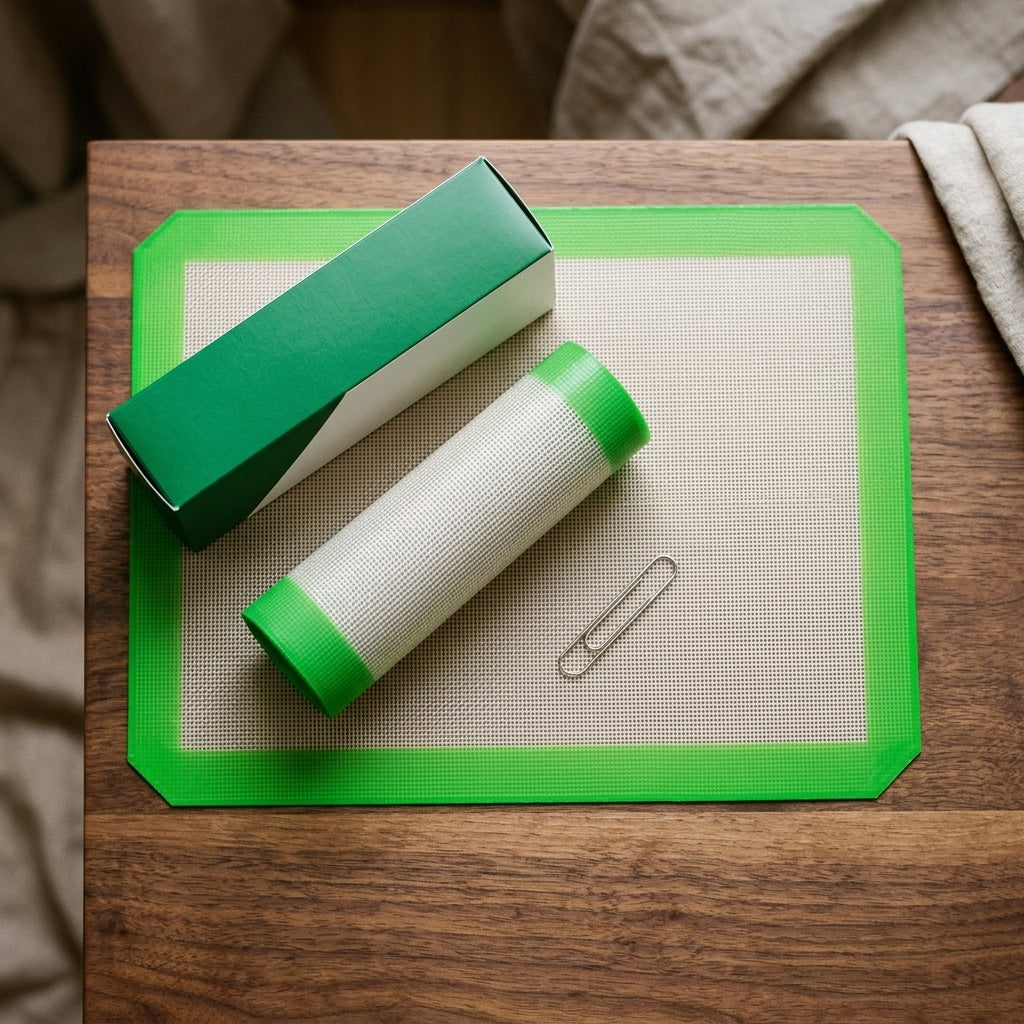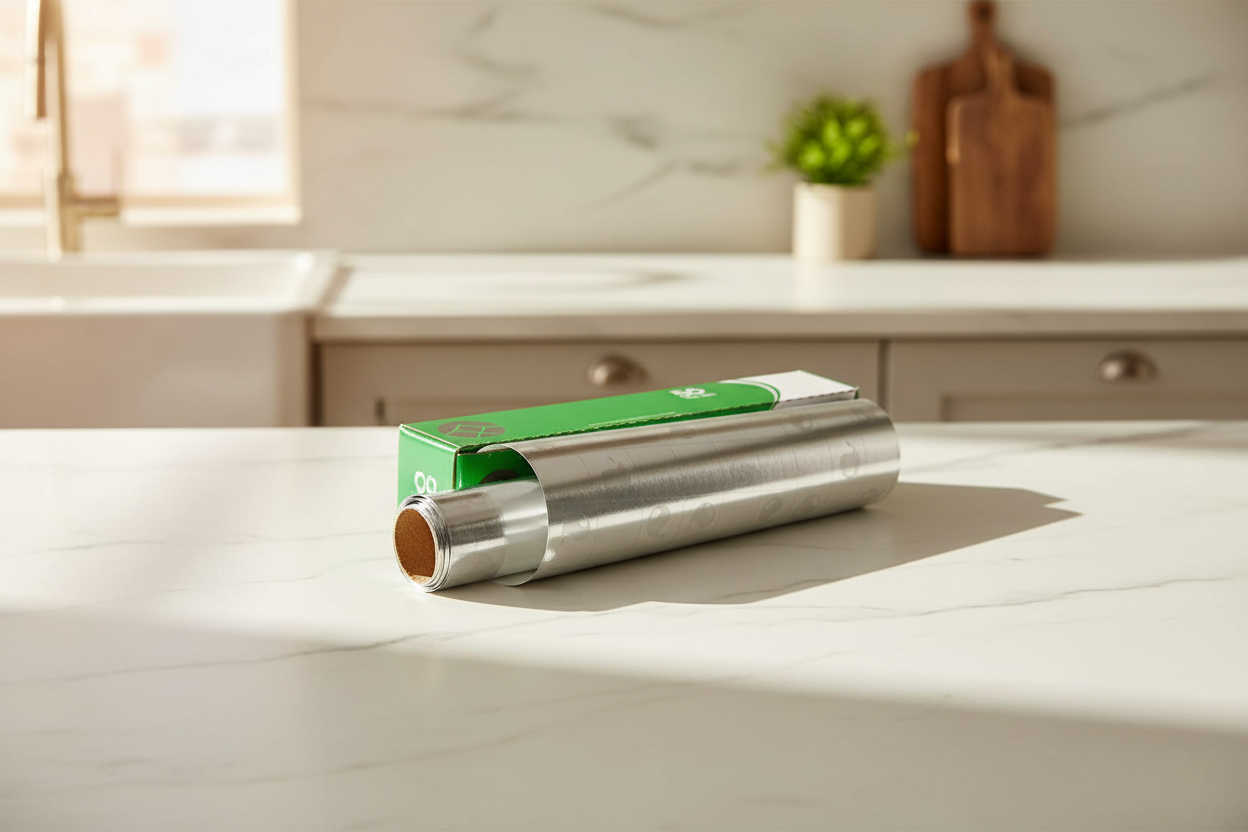
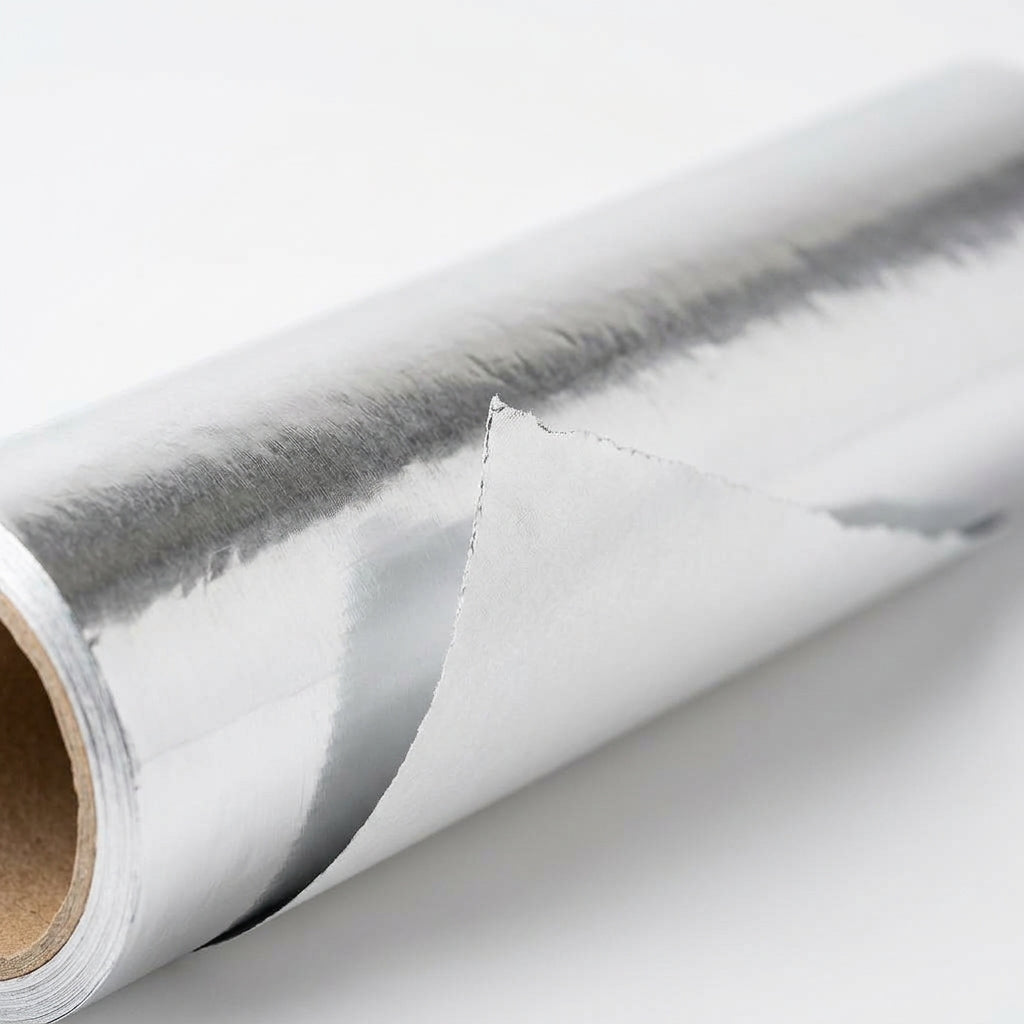
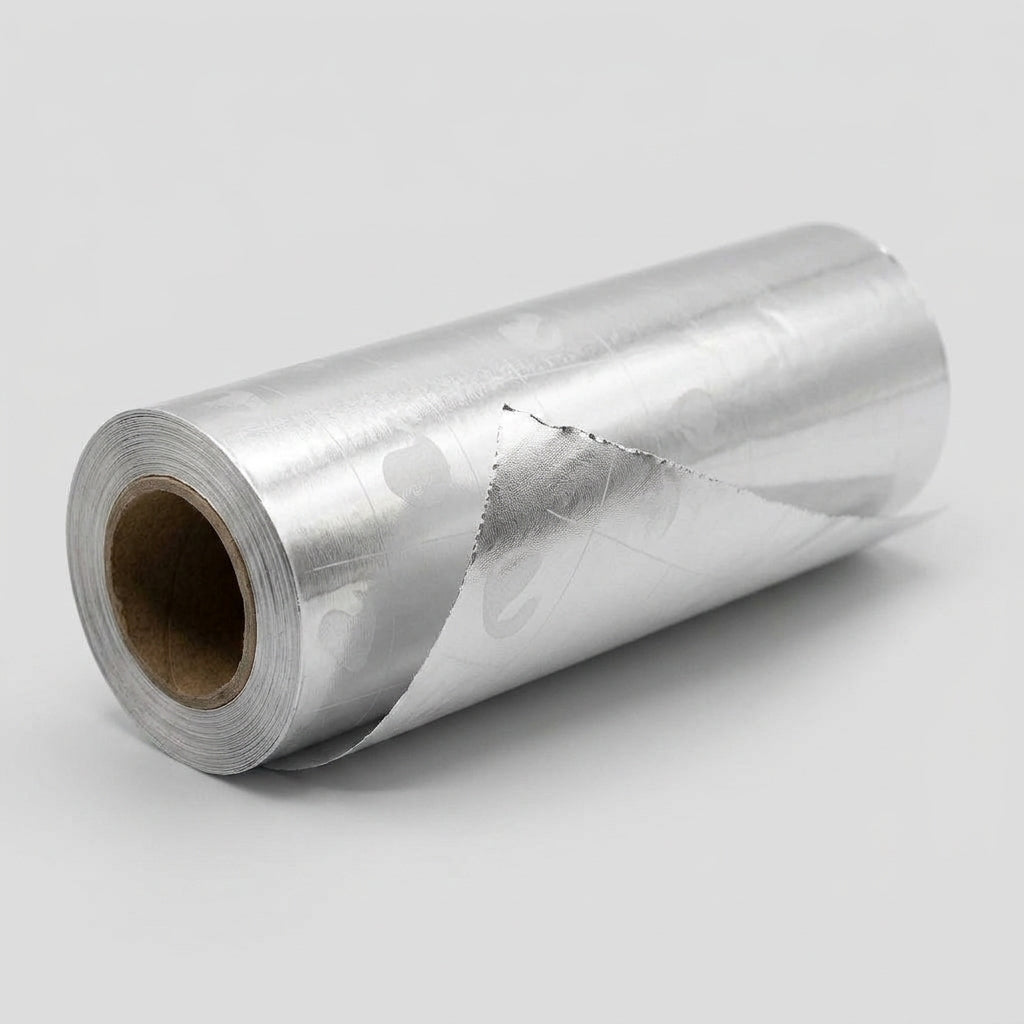
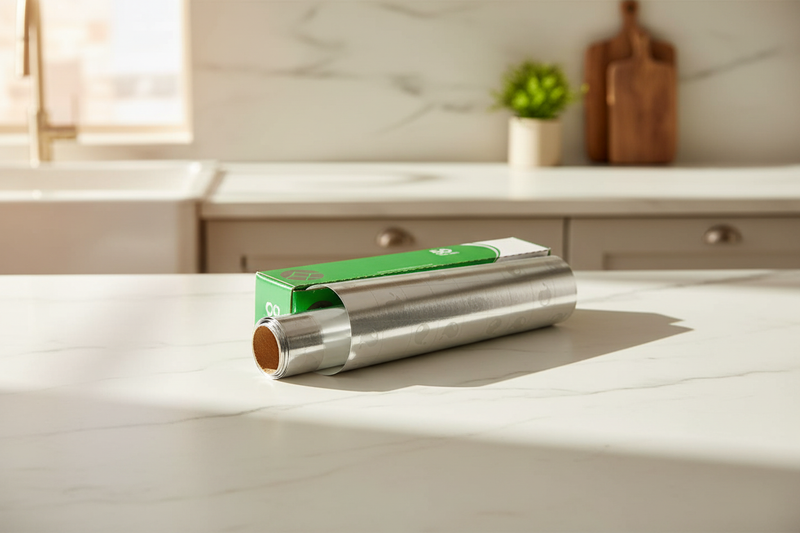
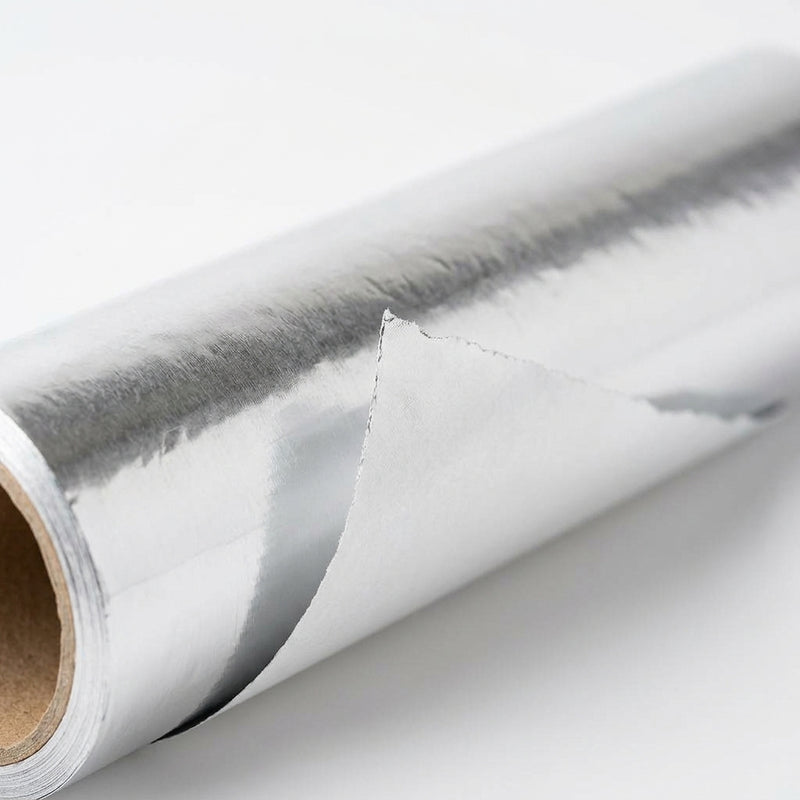
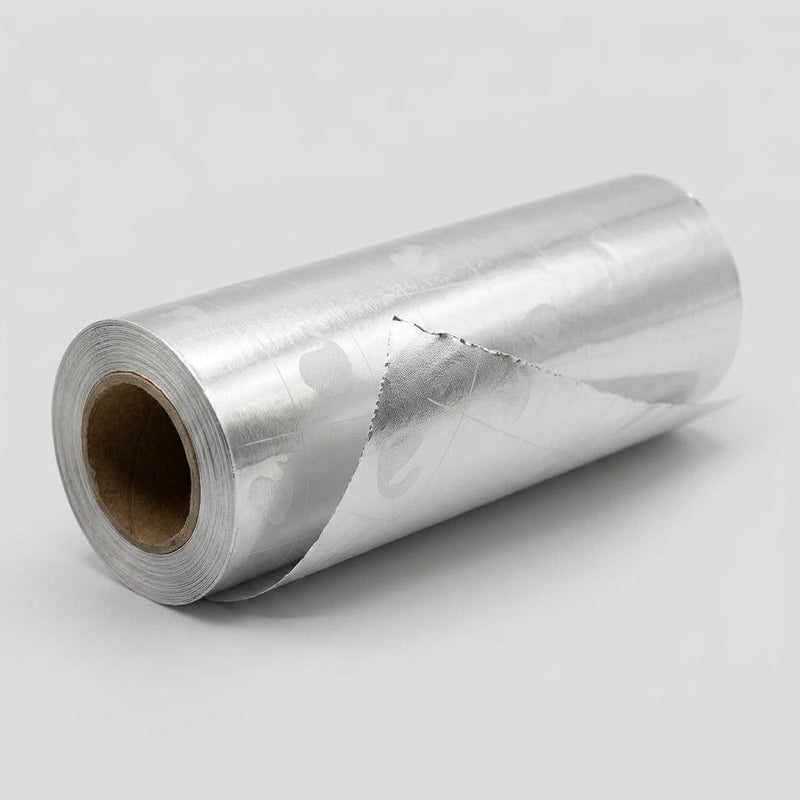
Parchment lined foil. Parchment on one side, foil on the other. The wrap your grocery store stopped carrying in 2014.
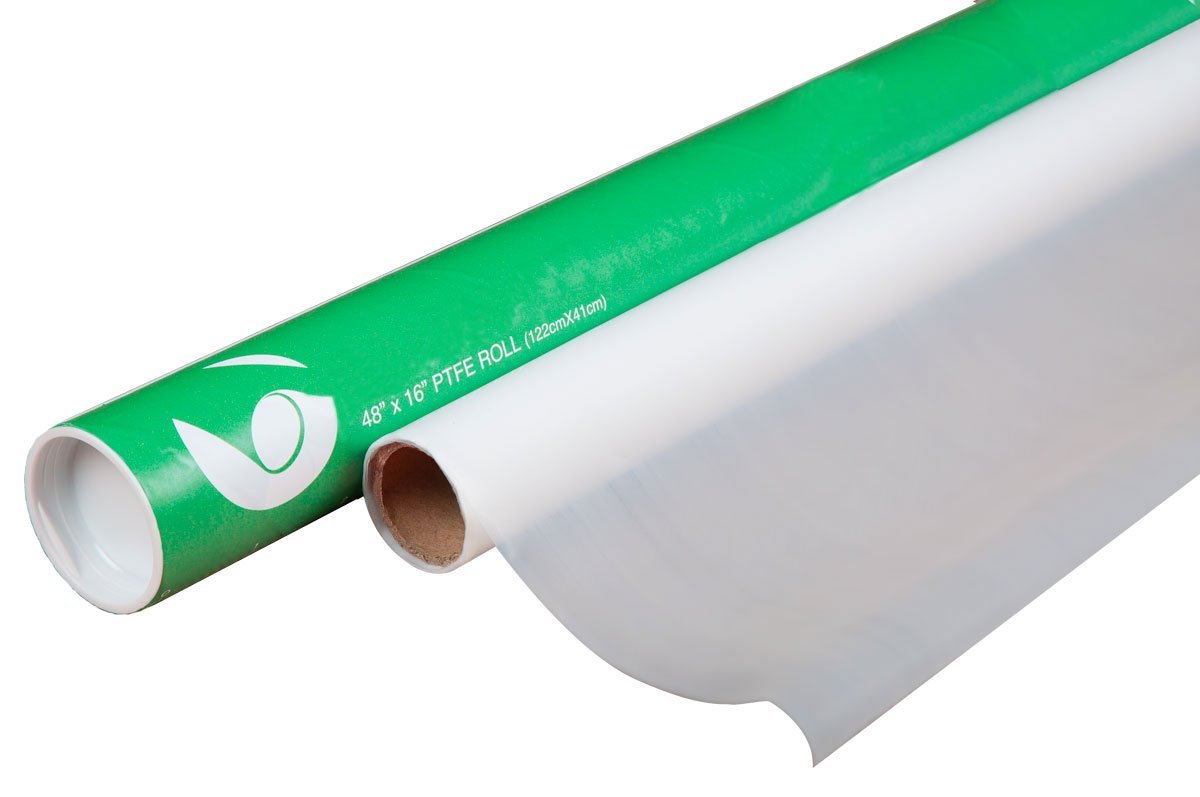
Parchment lined aluminum foil, sometimes called foil-backed parchment: a roll of food-grade parchment laminated to a thin food-grade aluminum foil, with a sealed waterproof membrane between them. The parchment side faces your food. The foil side faces the heat source. Cookies do not stick. Bottoms do not over-brown. One sheet holds a full batch.
5% off 5+ units. 10% off 10+. 15% off 25+. No code needed at checkout.
Why this one
This wrap used to be a standard grocery aisle item. The category quietly disappeared around 2014. We run small productions of the same construction on a quarterly schedule. The bakers who remember it are the bakers who reorder.
Specs
- Roll size: 12 inches wide by 50 feet long (600 inches), about 50 square feet per roll
- Width: 12 inches
- Construction: Parchment + foil + waterproof membrane
- Heat tolerance: Safe to 425F continuous, briefly to 450F
- Food-grade both sides
- Sold by the roll: 1 roll, pack of 2, box of 12, or master case of 32
What people use it for
“I really love the foil-backed parchment when I am making cookies, biscuits, rolls. I leave it in place through an entire batch. With regular parchment, I feel like I need to change it out between dozens.”
“I make my own rice cakes for cycling. This lets you wrap up your food like the pros. Works a charm.”
“Reliable. I use this for every cookie batch. The foil side really does keep the bottoms from over-browning.”
Common questions
Why is foil-backed parchment different from regular parchment?
Two things. The foil reflects bottom heat, which protects cookie undersides from over-browning. The combined sheet is thicker and stiffer, so it holds up to a full batch of dough without softening. One sheet, one batch, less change-out.
Is the foil safe to bake on?
The foil is sealed under a waterproof membrane and faces the heat source, not the food. The parchment side faces the food. Both layers are food-grade aluminum and food-grade parchment, both meet FDA food-contact standards.
Can I use it on a grill?
The parchment side is rated to 425F. Most home grills will exceed that at full heat, which would scorch the parchment. For grilling, switch to plain foil. For oven and sheet-pan use, this is the better tool.
How often do you restock?
Quarterly, with a buffer between runs. If a size is sold out, it is usually back within 6 weeks. Sold-out variants sink to the bottom of the page. In-stock variants are at the top.
Is this the same thing as Martha Wrap or the parchment lined foil from the grocery store?
Martha Wrap was a parchment-and-foil roll (12 inches by 40 feet) sold in grocery stores in the early 2010s, and it is hard to find today. Kraft & Kitchen Wrap is built the same way, parchment laminated to foil with a membrane between, on a longer 12 inch by 50 foot roll.
Often bought with
What customers say
- Could not find this in the store
After Martha Stewart discontinued hers I gave up looking. So glad I found this online. Cookies brown evenly on the bottom now.
D.B. · · Verified customer review
- Cookies, biscuits, and rolls all even
It is the only paper that handles all three without burning the bottoms. The foil layer makes a real difference.
L.C. · · Verified customer review
- My grandmother's recipe finally works
Hand pies kept burning underneath until I tried this. Now they come out the way she made them.
A.V. · · Verified customer review
- Bakery quality at home
Pro bakers I know order this. Now I do too. The reflection actually does something for browning.
H.N. · · Verified customer review
- Slightly stiff out of the roll
Took a moment to flatten. Once on the pan it works beautifully. Worth it for the result.
T.P. · · Verified customer review
- Ordered 5 more
After the first one I knew. Bulk discount makes it sensible to stock up.
M.G. · · Verified customer review