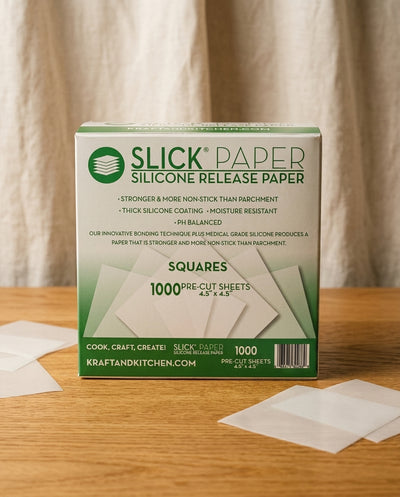
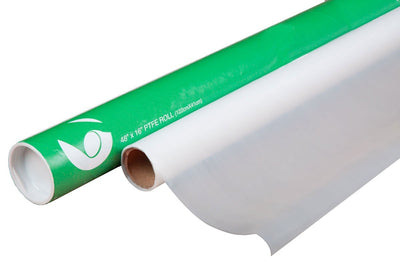
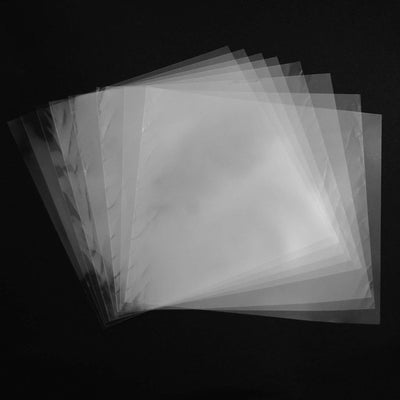
Silicone release paper is paper with a nonstick silicone coating, so adhesive, vinyl and resin let go of it cleanly. Each sheet is 8.5 x 14 inches (legal size), 250 sheets to a box.
See also: diamond painting guide · PTFE for heat press · all release paper and nonstick sheets
Release paper that peels off your diamond canvas in one piece.
A glassine paper with a bonded silicone coating, cut to legal size, 8.5 x 14 inches. The peel comes off whole. It survives the humidity that turns the original canvas sheet into confetti by week three.
5% off 5+ units. 10% off 10+. 15% off 25+. No code needed at checkout.
Why this one
Most replacement release papers are thin glassine with a sprayed-on coating that flakes. Ours is thicker glassine, with bonded silicone (not laminated, not sprayed) that does not lift. The peel test is the difference: a clean single pull versus a tear at the edge.
Specs
- Sheet size: 8.5 x 14 in (legal size)
- Sold as: 1 box of 250 sheets, or 12 boxes (3,000 sheets)
- Material: Silicone-coated glassine, food-safe
- Heat tolerance: Up to 425F (also works as a craft baking sheet)
- Bulk discount: 5% off 5+ items, 10% off 10+, 15% off 25+
From a customer review
“I have gone through several parchments trying to find something strong enough with a good coat… this is the only paper as far as I’m concerned that holds up.”
Common questions
Will the silicone come off in my hands?
No. The coating is bonded to the glassine at the manufacturing stage. It does not transfer to fingers, wax, or the canvas.
What other crafts work with this paper?
Sticker production (the cleanest peel surface most makers have used). Sublimation finishing. Resin curing (small pieces). Heat-press carrier sheets at standard HTV temperatures.
Is this the same as parchment paper?
No. Parchment is thicker, has a different surface treatment, and is designed for baking. Release paper is thinner, more aggressively nonstick, and designed for craft applications where you want clean separation between two surfaces.
Can I write on it?
The silicone side resists ink. The glassine back accepts pencil and most permanent markers. Most users label the glassine side and use the silicone side as the working surface.