You spend an hour cutting, weeding, and applying a custom vinyl sticker - and three weeks later it’s curling at the edges like it’s trying to escape. It’s one of the most frustrating things in sticker making, and it happens to pretty much everyone at some point.
The good news? Peeling stickers are almost always a surface prep or material problem, not a skill problem. And once you understand what’s actually going on at the adhesive level, you can fix it permanently.

Why Do Vinyl Stickers Start Peeling After a Few Weeks?
Vinyl stickers peel when the adhesive bond weakens due to surface contamination, temperature fluctuation, or incompatible materials. The adhesive on most vinyl is pressure-sensitive, meaning it needs clean, dry contact to form a lasting bond.
Here’s the deal. Most people skip the surface prep step entirely. They peel the backing, slap the sticker on, and hope for the best. But even a thin layer of dust, oil from your fingers, or residual moisture creates a barrier between the adhesive and the surface. The sticker looks fine at first because the edges make initial contact. But over days and weeks, those gaps let air underneath, and the edges start lifting.
Temperature swings make it worse. Vinyl expands and contracts slightly with heat and cold. If the adhesive doesn’t have full contact with the surface, those micro-movements work the edges free. Customers report this is especially bad on car windows and outdoor surfaces where temperature can swing 40 degrees in a single day.
The vinyl material itself matters too. Calendered vinyl (the cheaper stuff) has more “memory” - it wants to return to its flat sheet form. Cast vinyl is more conformable and holds curves better. For anything going on a curved surface or outdoors, cast vinyl lasts significantly longer. The price difference is usually $2-4 per sheet, and it’s worth every cent for applications that need to last.
What Surface Prep Actually Works Before Applying Stickers?
The single most effective prep method is wiping the surface with 70% isopropyl alcohol and letting it dry completely before application. This removes oils, dust, and residue that soap and water leave behind.
I know it sounds basic. But the difference between a sticker that lasts three weeks and one that lasts three years often comes down to this 30-second step. Soap leaves a film. Glass cleaner leaves a film. Even “clean” surfaces have fingerprint oils from handling. Isopropyl alcohol evaporates clean with zero residue.
For textured surfaces like laptop cases or water bottles with a matte finish, use a lint-free cloth (not paper towel, which sheds fibers) and press firmly while wiping. The texture traps contaminants in its valleys, so you need mechanical action plus the solvent.
Pro Tip: Let the alcohol dry for at least 60 seconds before applying. If you stick the vinyl onto a still-damp surface, you’re trapping moisture under the adhesive. That’s worse than not cleaning at all.
For outdoor applications on painted surfaces, test a small area first. Some automotive clear coats react poorly to alcohol. In those cases, a dedicated surface prep wipe from a craft supply store works as a safer alternative.
Does Backing Paper Quality Affect How Long Stickers Last?
Yes - low-quality backing paper can leave residue on the adhesive side of your stickers, which weakens the bond when applied. A silicone-coated release paper provides a clean release every time.
This is something most beginners don’t think about at all. The backing paper isn’t just a carrier - it’s in direct contact with your adhesive layer during storage and cutting. Cheap backing paper can shed fibers, transfer coatings, or stick too aggressively (which stretches the vinyl when you peel it).
Silicone-coated papers release cleanly because the silicone creates a true nonstick barrier. There’s no fiber transfer, no residue, no stretching. If you’ve ever noticed that stickers from professional shops feel “different” when you peel them compared to your homemade ones, the backing paper is often the reason why.
We covered the different types in our complete sticker backing paper guide, but the short version: for pressure-sensitive vinyl stickers that need to last, a silicone release liner rated for adhesive applications outperforms wax-coated or clay-coated alternatives by a wide margin.

How Do You Fix Stickers That Have Already Started Peeling?
For stickers that have just started lifting at the edges, you can often save them by pressing the edges down with firm pressure and applying a thin line of clear sealant along the border. Heat from a hair dryer (low setting, 6-8 inches away, 10-15 seconds) can also reactivate pressure-sensitive adhesive.
The hair dryer trick works because heat softens the adhesive, making it tacky again. Once warm, press the edge down firmly with a squeegee or credit card and hold for 20-30 seconds. The adhesive re-bonds as it cools. This works best within the first week of peeling. After that, dust and moisture have usually contaminated the exposed adhesive too much for a clean re-bond.
For stickers that have been peeling for a while, the realistic answer is that re-sticking them rarely produces a lasting result. The adhesive has been compromised. Your better move is to remove it cleanly, prep the surface properly this time, and apply a fresh sticker.
Warning: Don’t use super glue or craft adhesive to re-stick vinyl. It yellows over time, creates uneven bumps, and makes future removal a nightmare. If the original adhesive won’t hold, the sticker needs replacing, not gluing.
Can You Waterproof Vinyl Stickers at Home?
You can significantly improve water resistance by applying a clear laminate overlay or UV-resistant spray sealant over finished stickers. Lamination adds both waterproofing and UV protection, extending outdoor sticker life from months to years.
For printed stickers (inkjet or laser), lamination is basically mandatory for outdoor use. The printing is the weak point - water seeps into the ink layer and causes fading, bleeding, and peeling. A laminate sheet or clear nonstick film over the printed surface seals out moisture entirely.
For solid-color vinyl (like cut letters or shapes from a cutting machine), the vinyl itself is already waterproof. What fails is the adhesive bond. So waterproofing for these stickers means ensuring proper surface prep (see above) rather than adding a coating.
A spray sealant like clear polyurethane works in a pinch, but it adds a slightly cloudy layer and can yellow over time. Proper laminate film is always the better option when appearance matters. Apply it before cutting - laminating after cutting is possible but fiddly, and you risk getting sealant on the adhesive edge.
According to the Smithsonian’s preservation guidelines, pressure-sensitive adhesives maintain their bond strength significantly longer when protected from UV exposure. That applies to stickers too. UV breaks down adhesive polymers over time, which is why even well-applied outdoor stickers eventually fail without UV protection.
What About Temperature Limits for Vinyl Stickers?
Most standard vinyl adhesives maintain their bond between 50 and 180 degrees Fahrenheit, with optimal application temperature between 60 and 80 degrees. Applying in extreme cold or heat causes immediate bond failure in many cases.
This catches a lot of people off guard. You can have perfect surface prep, premium vinyl, and a flawless application - and still get peeling if you apply in 40-degree weather. Research from 3M’s adhesive technical bulletin confirms that pressure-sensitive adhesives lose tackiness below 50 degrees Fahrenheit because the polymer chains stiffen and can’t flow into the micro-texture of the surface.
Same problem at the other extreme. Above 90 degrees, the adhesive gets too soft and can slide before it sets. Reviews mention this happening a lot with car decals applied in direct summer sun.
If you’re working in less-than-ideal temperatures, bring the sticker and the target surface to room temperature first. For outdoor applications in cold weather, warm the surface with a hair dryer (not a heat gun, which can damage paint) to around 70 degrees before applying. Then press firmly and let it cure for 24 hours before exposing to weather.
For projects that need to survive extreme conditions, look into specialty high-temp or freezer-grade vinyl. Standard craft vinyl from a cutting machine isn’t rated for industrial temperature ranges, and no amount of surface prep will compensate for the wrong material choice. If you’re doing a lot of heat-related sticker work, understanding material ratings is essential.
We covered some of the same adhesive principles in our kiss cut vs die cut stickers guide - the cut type affects how much adhesive edge is exposed, which directly impacts peel resistance.

Shop Sticker Making Supplies
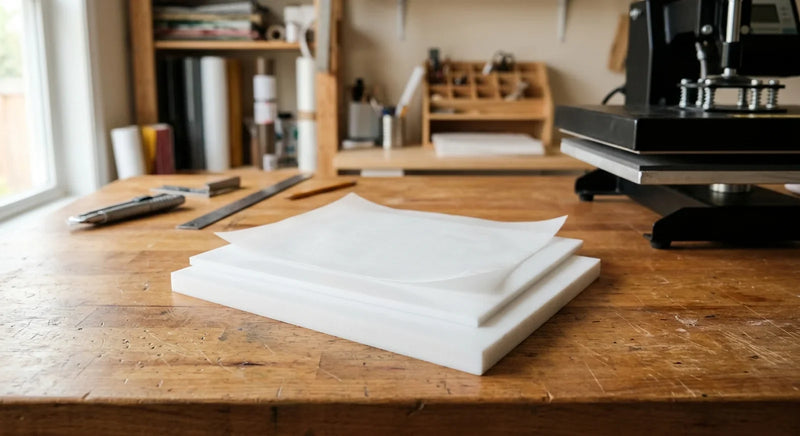
Getting clean sticker releases and professional results starts with the right materials. Our heat press and vinyl craft supplies cover everything from cutting to laminating, and our silicone pads give you a nonstick work surface for cleaner sticker assembly.
Once you nail the basics of surface prep and material selection, peeling stickers become a thing of the past. The difference between a sticker that lasts three weeks and one that lasts three years? It’s almost always the prep work and materials, not the design or the application technique. Get those two things right, and your stickers will stay exactly where you put them!