You need a cutting machine (or a good pair of scissors and some patience), printable sticker paper, a quality printer, release paper for backing, and about $200-400 in startup capital to get your first batch of custom stickers out the door.
That’s the short answer. The longer answer involves figuring out which of those things actually matter and which ones are just craft influencers trying to sell you their affiliate links. I’ve watched enough “start a sticker business in a weekend!” videos to know the difference between helpful and sponsored.
So here’s the real breakdown - what you actually need, what you can skip, and where most people blow their budget before they’ve sold a single sticker.

What Equipment Does a Sticker Business Actually Require?
A sticker business requires three core pieces of equipment: a high-quality inkjet printer, a cutting tool (manual or electronic), and proper backing material like silicone release paper to give your stickers a professional peel.
The printer is where most people either overspend or underspend. You don’t need a $500 wide-format beast on day one. A solid inkjet printer in the $150-200 range handles standard sticker sheets just fine. The key spec to look for is pigment-based ink rather than dye-based - pigment holds up to water and UV exposure, which means your stickers won’t fade when someone slaps them on a water bottle and forgets about it for six months. The U.S. Small Business Administration’s startup guide has solid frameworks for budgeting equipment costs if you want to get formal about it.
For cutting, you’ve got two paths. A manual approach with precision scissors or a craft knife works for small runs (think 50-100 stickers at a time). But if you’re planning to sell at any kind of volume, an electronic cutting machine cuts your production time by roughly 80%. Most machines in the $250-350 range handle both kiss cuts and die cuts without breaking a sweat.
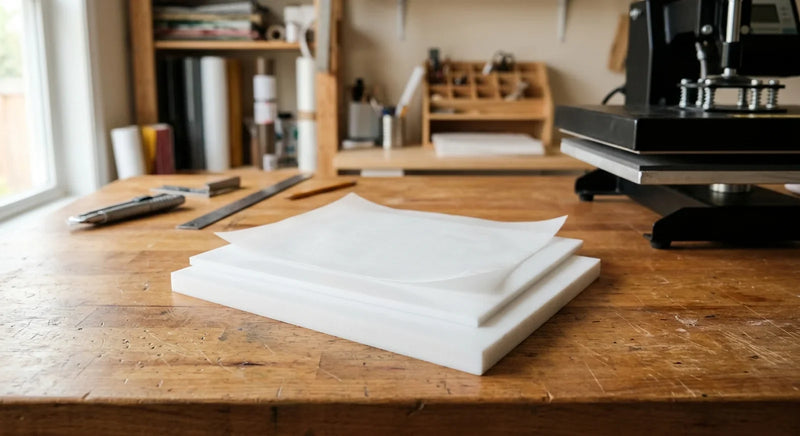
And then there’s the backing. This is the part people skip and immediately regret. Your stickers need proper release paper as a backing liner - it’s what gives that satisfying peel when customers actually use them. Standard copy paper doesn’t work. Wax paper is a mess. True silicone-coated release paper provides a clean, consistent release that makes your stickers feel like they came from a professional print shop.
How Much Does It Cost to Start Selling Stickers?
Starting a basic sticker business costs between $200 and $400 for materials and equipment, not counting the cutting machine if you go electronic.
Here’s where it gets kind of funny. I see business plans online with $2,000+ startup budgets for a sticker business, and I really wonder what they’re buying. Gold-plated scissors? Let me break down a realistic first-run budget.
Your printer (if you don’t already own one): $150-200. Your first batch of printable sticker paper (100 sheets): about $25-40. Silicone release paper for professional backing (50 sheets of quality nonstick paper will get you through your first 200+ stickers): roughly $12-15. A self-healing cutting mat and precision knife: $15-20. Packaging supplies (poly mailers, thank-you cards): $20-30.
That puts you at $222-305 for a manual cutting setup. Add $250-350 for a cutting machine if you want to go electronic from the start.
The margins on stickers are legitimately great, though. A sheet of printable vinyl costs about $0.40. You can fit 6-10 stickers on a single sheet depending on size. If you’re selling individual stickers at $3-5 each, you’re looking at 85-90% gross margins before shipping and platform fees. Not bad for something you can produce from your kitchen table.

What Kind of Stickers Sell Best for New Businesses?
Vinyl die-cut stickers in the 2-3 inch range sell best for new sticker businesses, particularly those with niche-specific designs (pets, plants, professions, and fandoms consistently outperform generic designs).
The sticker market splits into a few camps, and knowing which one you’re aiming for saves you from making 500 stickers nobody wants.
Die-cut stickers (where the cut follows the shape of the design) outsell kiss-cut stickers by roughly 3:1 on platforms like Etsy, according to seller community data. Kiss cuts are easier to produce since you’re just cutting through the vinyl layer and not the backing, but customers perceive die-cuts as more premium. And perception matters when you’re charging $4 for something that cost $0.06 in materials.
Size matters too. The 2-3 inch sweet spot works because it fits on laptops, water bottles, phone cases, and notebooks without looking weird. Go too small and people feel ripped off. Go too big and they can’t find a surface for it.
As for design niches that actually move product: pet breeds (specific ones, not generic “I love dogs”), indoor plants, profession-specific humor (nurses, teachers, and programmers buy a LOT of stickers), and seasonal designs tied to holidays. The overlap between “things people build an identity around” and “things that fit on a 3-inch circle” is where the money lives.
What Backing Material Works Best for Professional Stickers?
Silicone release paper provides the cleanest peel and most professional feel for custom stickers, outperforming wax paper, plain cardstock, and plastic film backings in both consistency and customer experience.
This is the part that separates “I made stickers” from “I sell stickers.” The backing liner - that sheet your customer peels off before applying the sticker - matters way more than most new sellers realize.
Here’s why. Cheap backing material causes two problems: either the sticker won’t peel cleanly (it tears or curls), or it peels too easily (stickers fall off the sheet in transit and arrive in the envelope looking like a sticky pile of regret). Neither outcome gets you repeat customers.
True silicone-coated release paper solves both problems. The silicone coating provides a consistent release force - enough to hold the sticker in place during shipping, gentle enough for a clean peel when it’s go time. If you’re cutting stickers from printable vinyl sheets, laminating them for durability, and then applying them to quality silicone release backing, you’ve essentially matched the output of a commercial print shop. The Smithsonian’s materials science overview explains why silicone coatings outperform other release agents - it comes down to surface energy and molecular structure.
Pro Tip: Cut your backing material slightly larger than the sticker itself, about 1/4 inch border on all sides. It gives customers something to grip during peeling and looks way more professional than a backing cut flush to the sticker edge. For larger runs, buying release paper in bulk keeps per-unit costs low.

How Do You Actually Sell Your Stickers Once They’re Made?
The three most profitable sales channels for new sticker businesses are Etsy (lowest barrier to entry), Instagram/TikTok direct sales (highest margins), and local craft markets (best for testing designs in person).
Making the stickers is the easy part. Selling them is where most sticker businesses stall out, usually because people pick the wrong platform for their stage of growth.
Etsy works best for your first 0-100 sales. The platform has built-in search traffic from people already looking to buy stickers. Listing fees are $0.20 per item, and Etsy takes about 6.5% plus payment processing (the FTC’s guide to starting an online business covers the legal basics you should know before your first sale). It’s not free, but you’re paying for access to an audience that already has their wallet out.
Social media (particularly TikTok and Instagram) is where sticker businesses really take off, but it requires consistent content creation. The sellers who post process videos - printing, cutting, weeding, packaging - tend to build loyal followings fast. There’s something oddly satisfying about watching stickers get made. It’s the craft equivalent of those pressure-washing videos that eat three hours of your Saturday.
Local craft fairs and markets are underrated for a few reasons. You get immediate feedback on which designs people actually pick up. You can charge slightly more because people pay a premium for “I bought this from the artist” energy. And you avoid shipping entirely, which at sticker margins is significant.
One thing regardless of platform: invest in your workspace setup. A dedicated sticker production area with proper cutting supplies, storage for your vinyl rolls, and organized backing material means faster production and fewer mistakes when orders start coming in. And if you’re storing supplies in small containers, glass jars work surprisingly well for keeping vinyl scraps, spare blades, and ink cartridges sorted.
Shop Sticker-Making Supplies
If you’re ready to start your sticker business (or upgrade from scissors and hope), we carry the release paper, nonstick backing materials, and craft supplies that give your stickers that professional finish. Browse our silicone pads and trivets for durable cutting mats, or check out the diamond painting accessories if you’re looking for small glass jars to organize your sticker components and vinyl scraps.
The sticker business is one of those rare crafts where the gap between “hobby” and “profitable side hustle” is surprisingly small. A few hundred bucks in materials, some designs that speak to a specific niche, and proper backing material are the whole formula. The hard part isn’t the supplies - it’s picking a design niche and actually listing your first batch instead of perfecting them forever.
So make the stickers. Peel the backing. Ship the order. You can optimize everything else after your first 100 sales.