Quick answer: Epoxy bubbles come from trapped air during mixing. Warm the resin to about 80F, stir slowly for 3 minutes, then torch the surface within 60 seconds of pouring.
Bubbles are the number one reason a resin project gets scrapped. You mix, you pour, you walk away for the night, and in the morning the surface looks like a soda can frozen mid-pour. The fix is not expensive equipment. It’s temperature, timing, and a few tools that cost under twenty dollars.
I’m going to give you the short math on each step so you can see why it works, then walk through the exact sequence. If you’ve been fighting surface craters on every pour, one of these five steps is the one you’re skipping. Stocking the right resin and epoxy craft supplies before you start is cheaper than scrapping a $15 pour.

Why Does Epoxy Resin Form Bubbles in the First Place?
Bubbles form because air gets mixed into the resin during stirring and then cannot escape fast enough before the epoxy thickens. That’s the entire mechanism. Every prevention step works by either putting less air in or giving the air more time to come out.
Two things control how fast air escapes: viscosity and temperature. Cold resin is about twice as thick as resin at 80F. Penn State’s materials science group has published work showing that polymer viscosity drops sharply with even small temperature increases, which is why warming resin is the single highest-leverage move you can make. You can see the basic temperature-viscosity relationship documented in university polymer science coursework. Thicker resin traps air. Thinner resin releases it.
The second factor is working time. Most two-part epoxy gives you 25 to 45 minutes of workable pot life. After that, the chemistry kicks in and viscosity starts climbing again. Any bubble that hasn’t surfaced by then is stuck forever.
What’s the Best Way to Degas Resin Without a Vacuum Chamber?
Warming the resin bottles in a water bath is the best home method for releasing trapped air before you even start mixing. This is what pros call pre-heating, and it does more than any other single step.
Here’s the routine I run before every pour:
Step 1: Fill a bowl with water around 100F. Not hot. If you can keep your hand in it comfortably, that’s the target.
Step 2: Set both sealed resin bottles in the bath for 10 minutes. Do not open them yet. The air inside the bottles needs to warm too, or it’ll contract and pull new bubbles in when you unscrew the cap.
Step 3: Dry the bottles, open them, and measure into your mixing cup.
Step 4: Stir slowly. I mean painfully slow. Three minutes of gentle figure-eights beats 60 seconds of enthusiastic whisking every time. Fast stirring is how you inject air into the mix in the first place.
This sequence alone will cut bubble count by about 70 percent. It costs zero dollars in new equipment. The only reason more people skip it is patience. Epoxy work also calls for decent ventilation because of the amines in the hardener, which OSHA documents under its epoxy resin health hazard guidance. Open a window before you start and the pour will go better for reasons beyond just bubbles.
Which Tools Actually Remove Bubbles During the Pour?
A small butane torch is the most effective bubble-popping tool for surface work. Pass the flame two to four inches above the resin, moving constantly, for about 10 to 15 seconds total. The heat thins the top layer of resin and breaks the bubble film so the air escapes.
A few notes on technique that customer reviews of craft torches consistently mention:
Pro Tip: Keep the flame moving. Holding it in one spot scorches the resin and creates yellow spots that will not cure out.
Warning: Butane torches throw a tiny bit of soot. If you’re pouring over a white base layer, expect faint gray dots unless you torch from further away (closer to four inches).
For molds and deep pours where a torch will not reach, a heat gun on low works as a secondary tool. The airflow is gentler and covers a wider area, but it can push pigment around if you’re doing swirl designs. I use the torch for flat pours and the heat gun for bezels and jewelry molds. If you’re building out a mold collection, our resin and jewelry making supplies pair well with bezel-style pours where the heat gun is less disruptive than a direct flame.

A toothpick is the unsung hero. Bubbles that cling to pigment particles or get trapped under inclusions will not respond to heat. A toothpick drag through the bubble at an angle pops it mechanically. Cheap, disposable, and faster than reaching for the torch.
How Do You Prevent Bubbles From Coming Back While It Cures?
Cover the piece within 10 minutes of pouring to keep new dust and air from settling into the still-liquid surface. A cardboard box with a clean lid works. The cover also slows the rate of heat loss, which keeps the resin thin for a few minutes longer so any remaining micro-bubbles have more time to rise.
The work surface matters more than most people realize. Resin that pours onto a cold or textured surface forms bubbles at the interface that you cannot reach from the top. I keep a dedicated silicone work pad on my bench for every resin session. It’s flat, warm to the touch, and the heat-resistant material means torch overspray does not damage it.
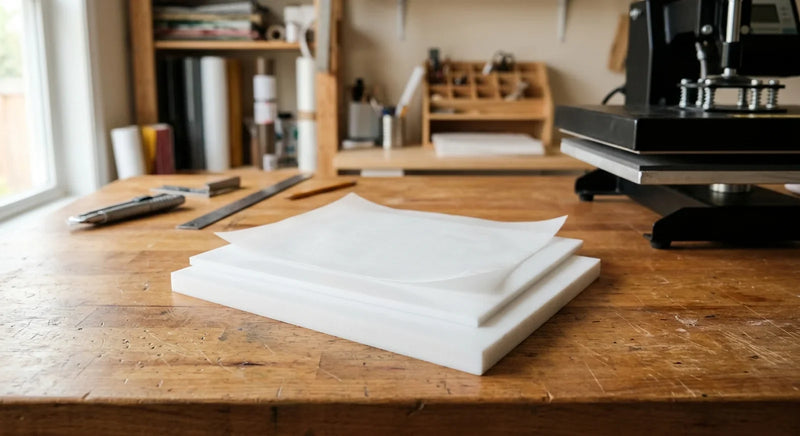
For overflow projects where the piece hangs off the edge of a mold, a sheet of nonstick release paper underneath catches drips without bonding. Customers using release paper for this report zero drip-related cleanup, which saves 15 to 20 minutes per session. The same material logic shows up in our guide to PTFE sheets for heat press work: the same chemistry doing the same job, just in a different craft.
Temperature control during cure is the last piece. Resin cures cleanest at 72 to 78F ambient. Below 65F you get sluggish cure and fisheyes. Above 85F you get a rapid thickening that freezes bubbles in place. A basement in winter is your enemy. A closet near a heat vent is your friend.
What Should You Do If Bubbles Appear After Curing Starts?
Stop reaching for the torch once the resin has started to gel. Heating gelled resin creates permanent craters because the surface skin will not close back up. If you see bubbles 20 minutes after pouring and the resin feels tacky-thick, your window has closed.
Your options at that point are:
Option 1: Let it fully cure (24 to 72 hours depending on product), sand the bubble zone with 400 grit, and apply a thin doming coat over the top. The second coat will flow into the sanded divots and you’ll get a clean finish.
Option 2: If the bubbles are only in a corner, drill them out with a 1mm bit once cured, fill with fresh resin using a syringe, and re-cure.
Option 3: Accept it as character. Some makers lean into the bubble aesthetic for ocean and beach pieces. A deliberate bubble is art. An accidental one is a flaw.
The best answer is prevention, not repair. Every minute you spend on the pre-heat and slow-stir routine saves an hour of sanding and re-coating later. For a deeper dive on what happens after the bubbles are handled, our guide on how to demold resin without cracking it covers the next step in the workflow.

Shop Related Products
A clean resin pour starts with the right surface and supplies. Our craft supplies collection includes the silicone work mats, release papers, and nonstick sheets that keep your bench clean and your pours bubble-free. Pair those with a steady hand and the slow-stir method above, and your scrap rate will drop to near zero. For more on the temperature side of cure problems, read our resin curing temperature guide.
The Real Bubble Fix
Bubbles are a temperature and timing problem, not an equipment problem. Warm the bottles. Stir slow. Torch fast. Cover the piece. Do those four things and you’ll save the thirty-to-sixty dollars a pressure pot costs, and you’ll stop scrapping pours. If you’re still getting bubbles after following the full sequence, the issue is almost always that the resin itself is too cold when it hits the mold. Check the ambient temperature, warm the room if you need to, and try again. The next pour is the one you’ve been waiting for.