Quick answer: Most beginners ruin diamond paintings by peeling off too much protective film, which lets dust kill the adhesive. The fix takes five seconds: only uncover a small section at a time, and use silicone release paper instead of the plastic film that came in your kit.
Why Does the Whole Canvas Lose Its Stick After Two Sessions?
Pressure-sensitive adhesive on diamond painting canvases degrades within hours of full exposure to air, dust, and skin oils. That’s not a defect - it’s basic polymer chemistry. The adhesive layer uses acrylic copolymers that bond on contact, and those bonds weaken every time airborne particles land on the exposed surface.
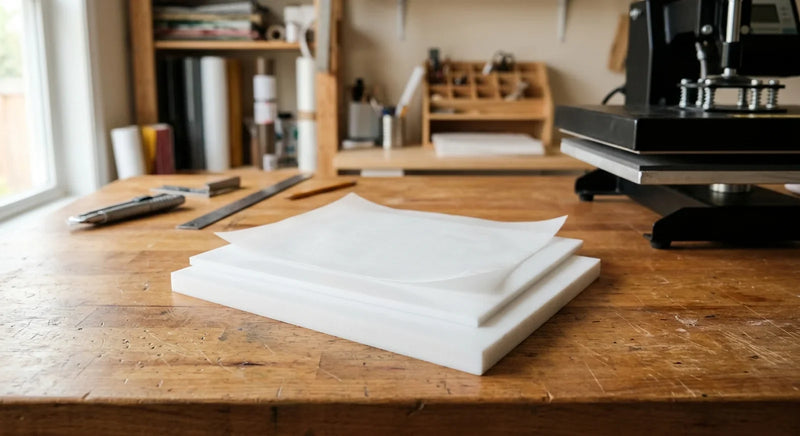
Here’s the thing most kits won’t tell you: that clear plastic film covering your canvas is a temporary shipping protector, not a crafting tool. It curls, it sticks to itself, and the second you pull it back it exposes way more canvas than you need. Swap it for silicone release paper on day one. Silicone-coated paper lies flat, peels cleanly, and won’t yank up drills you’ve already placed.
If you're wondering whether to start with round or square drills, our 2026 drill shape comparison has the answer.The fix is almost embarrassingly simple. Peel back about a 3-inch strip of covering, work that section, then slide the release paper back over. Your canvas stays tacky for weeks instead of days. I’ve seen crafters blame “cheap canvases” when the real culprit was leaving the whole thing uncovered during a Netflix binge. If your canvas already lost its grip, check out how to restore a sticky diamond painting canvas for recovery options.

Are You Starting Your Diamond Painting in the Wrong Spot?
Starting from the center or a random section guarantees your hand will drag across exposed adhesive, displacing drills and depositing skin oils. Always work from a top corner and move down systematically - right-handers typically start top-left, left-handers top-right.
This isn’t about being rigid. It’s about physics. Your wrist and forearm rest on the canvas below wherever you’re placing drills. If you’ve already placed drills below your work area, congratulations - you’ve just popped them loose with your elbow. And if that section is still exposed adhesive, your arm is now a lint collector feeding debris directly onto the sticky surface.
Working corner-to-corner also makes tracking progress easier. You can see exactly how much you’ve completed without scanning the whole canvas wondering if you missed a spot. For large projects (anything above 30x40cm), this systematic approach is the difference between finishing and abandoning the piece halfway through. If you’re tackling a bigger canvas, this guide on completing large diamond paintings breaks down the full strategy.
Why Do Your Diamond Painting Drills Keep Falling Off?
Drills detach most often because they weren’t pressed firmly enough during initial placement, not because the adhesive failed. Each drill needs about 2-3 seconds of steady finger pressure to form a proper bond with the canvas.
Most beginners just tap the drill into place and move on. That gives you maybe 40% contact between the drill’s flat bottom and the adhesive surface. The remaining 60% is air. Air gaps are where drills start lifting, especially once you stand the canvas upright for framing.
A quick fix: after completing each section, lay a flat piece of release paper over the finished area and press down firmly with a rolling pin, a book, or even a clean jar. This seats every drill flush against the adhesive. The release paper prevents your tool from pulling drills out of position. We’ve covered this in depth in our guide to fixing loose drills if it’s already happening to you.

How Does Poor Drill Organization Wreck Your Project?
Mixing even two similar-numbered drill colors together can force you to sort hundreds of tiny resin pieces by hand under bright light - a task roughly 10 times slower than organizing them properly from the start. Your kit’s numbered bags are a starting point, not a permanent storage system.
The bags tear. They spill. They look identical when you’ve got 35 colors spread across your workspace. And once DMC 310 mingles with DMC 3799, you’re squinting at near-identical blacks for twenty minutes wondering if craft supplies have always been this stressful.
Small glass jars sorted by number solve this permanently. 5ml jars hold roughly 200 round drills each, they won’t tip over like bags, and you can actually see the color through the glass. Label each lid with the DMC number and you’ve got a drill library that works across multiple projects. The jars are reusable too, which matters when you realize diamond painting generates a surprising amount of single-use plastic waste from those original bags. (We use the same glass jar approach for storing resin pigments and glitter - works just as well for any tiny craft supply.)
Research on fine motor activities like diamond painting shows they engage cognitive functions including working memory, attention, and problem-solving - but none of those benefits kick in when you’re spending half your craft time untangling a color catastrophe.
What Wax Mistakes Slow Down Your Diamond Painting?
Overloading your applicator pen with wax leaves sticky residue on the canvas and causes drills to release mid-placement. Use just enough wax to lightly coat the pen tip, about the size of a pinhead. One wax square should last through hundreds of drill placements if you’re dipping correctly.
The instinct is to jam the pen deep into the wax pad like you’re loading a fountain pen. But pressure-sensitive wax works on surface contact, not volume. A light touch creates a thin, even coat on the pen tip that grabs drills cleanly and releases them cleanly. Too much wax, and the excess transfers onto the canvas adhesive, creating a barrier between the drill and the glue. That’s when people start blaming the canvas for “not being sticky enough” when the wax was the saboteur all along.
Here’s another one nobody warns you about: letting the wax pad dry out. Most kits include a single pink wax square that hardens after a few sessions if left uncovered. Store it in a sealed container between sessions. Some crafters switch to blue tack or poster putty as an alternative, but the kit wax is formulated specifically for drill pickup weight - alternatives can be too sticky and yank drills sideways during placement. Fresh diamond painting accessories including replacement wax cost less than a single ruined canvas section.

Shop Diamond Painting Essentials
Done making these mistakes the hard way? (We’ve all been there.) Proper release paper, storage jars, and fresh wax pads solve most of them before they start - and cost less than replacing a ruined canvas. Browse our diamond painting supplies for everything from silicone release paper to drill organizers.
Every mistake on this list traces back to one root cause: rushing. Diamond painting rewards patience more than almost any craft out there. The drills aren’t going anywhere. The adhesive waits for you. And the tiny, meditative rhythm of pick-place-press is the whole point.
Start small. Get your system dialed in with a 20x25cm practice piece before committing to that 80x60cm masterpiece. Organize your drills before you place a single one. Protect your canvas like it’s valuable (because at $30-50 for a quality kit, it is). And when something goes wrong - because it will - treat it as a lesson, not a disaster. Your next project is always going to be better than your first!