Quick answer: Foil-backed parchment is parchment bonded to aluminum foil; bake with the parchment side up and the foil side down. It's rated to 425°F continuous, so use it for cookies, sheet-pan roasting and food packets, but keep it out of the microwave, the broiler and a full-heat grill.
Foil-backed parchment is one of those kitchen products that used to be easy to find and then quietly wasn't. The category mostly vanished from grocery aisles in the mid-2010s, which is why so many people now search for it as "parchment lined foil" or "foil and parchment paper together." The idea behind it is simple. Parchment gives you a nonstick surface. Foil gives you shape, stiffness and a reflective back. Put both in one sheet and you stop choosing between them.
This guide covers what it is, which side faces up, why bakers like it for cookies, what else it handles, and the few places it shouldn't go. If you're still weighing parchment against a reusable mat, our silicone baking mat vs parchment breakdown covers that side of the question.
What Is Foil-Backed Parchment Paper?
Foil-backed parchment is food-grade parchment laminated to thin aluminum foil with a sealed membrane between them.
You'll see it sold under a few names: parchment lined foil, foil parchment paper, paper-backed foil or foil-lined parchment. They all describe the same three-layer build.
Here's what each layer does:
- Parchment (top): Paper treated and coated with silicone so food releases cleanly. This is the side your cookies, fish or vegetables touch.
- Membrane (middle): A sealed, waterproof layer that keeps grease, juices and moisture from soaking through to the foil.
- Aluminum foil (bottom): Holds a fold, stiffens the sheet and reflects heat. This side faces the pan.
Think of it like a good rain jacket. The outer shell takes the weather, the liner keeps you comfortable, and you never have to think about which job belongs to which layer.
Our version, Kraft & Kitchen Wrap, comes on a roll 12 inches wide and 50 feet long, which works out to about 50 square feet per roll. Both sides are food-grade. You'll find it alongside our other release papers in the nonstick papers collection.

Which Side of Foil-Backed Parchment Goes Up?
The parchment side always faces the food, and the foil side faces the pan or the heat source.
It's easy to tell them apart. The parchment side is matte, tan or off-white paper. The foil side is silver and shiny. There's no guessing like the old shiny-side-or-dull-side debate with plain foil, because the material itself tells you.
Getting it backwards causes two problems:
- Sticking. Bare foil has no release coating, so sugary doughs and glazes grab onto it.
- Metal contact. Acidic foods like tomato sauce, citrus and vinegar marinades can react with bare aluminum and pick up a metallic taste. With the parchment side up, food never touches the foil.
The same rule applies when you fold a packet or wrap a sandwich. Parchment goes on the inside against the food, foil goes on the outside.
Pro Tip: Fresh off the roll, the sheet wants to curl. Lay it on the pan with the curl facing down, then press the foil edges over the rim of the pan. The foil holds that bend, so the sheet stays flat without clips or a smear of butter in the corners.
How Do You Cut It Cleanly?
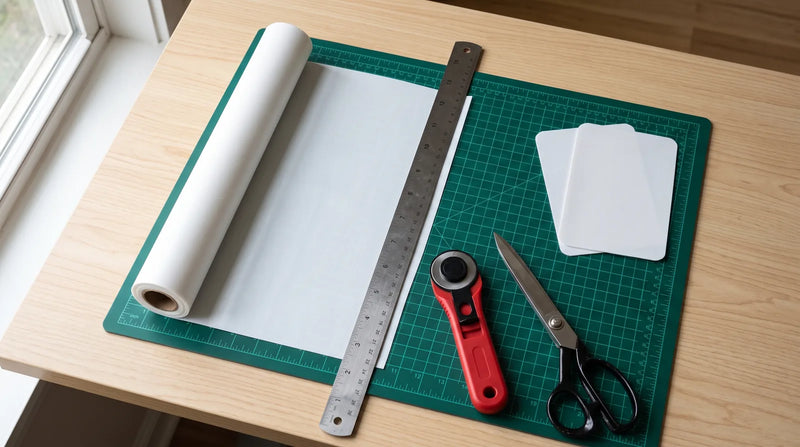
Kitchen scissors give the cleanest edge, since the foil layer makes the sheet tougher to tear by hand than plain foil. Measure one sheet against your pan, cut straight across, and use it as a template for the rest. If you bake on the same pan every week, cutting five or six sheets at once saves a step on busy days.
Why Do Cookies Bake Better on Foil-Backed Parchment?
The foil layer reflects radiant heat from below, so cookie bottoms brown more slowly and more evenly.
An oven cooks food three ways at once: hot air moving around it, direct contact with the pan, and radiant heat from the elements and walls. Dark pans soak up radiant heat, which is why cookies on a dark pan brown fast on the bottom. Shiny surfaces bounce it back.
Aluminum foil is the same material used in home radiant barriers, and the U.S. Department of Energy explains that these foil barriers reflect radiant heat instead of absorbing it. With the foil side down on your sheet pan, part of the radiant energy that would hit the dough's underside gets reflected instead.
That's the first reason bakers reach for it. The second is stiffness.
Plain parchment softens as butter from the dough soaks in, especially over two or three back-to-back batches. The laminated sheet is thicker and doesn't go limp. One review of our wrap describes leaving a single sheet in place through an entire batch of cookies, biscuits or rolls, where plain parchment needed changing between dozens.
The third reason is cleanup. When a tray comes out, you can slide the whole sheet onto a cooling rack, load fresh dough onto a second sheet, and keep the pan moving.
Do You Need to Grease It?
No. The silicone-coated parchment releases cookies, biscuits and roasted vegetables without spray or butter. Greasing the parchment side can actually make thin cookies spread more than the recipe intends.
Should You Change Your Bake Time?
Recipes are usually written for a light-colored pan with plain parchment or nothing at all. The first time you use foil-backed parchment, check at the low end of the recipe's time range. After one batch you'll know whether your oven and pan need an extra minute or not.
What Can You Cook With Parchment Lined Foil?
Use it for cookies, biscuits, sheet-pan vegetables, fish packets, roasting and wrapping food to carry.
Cookies, Biscuits and Rolls
This is where it earns its keep. One 12-inch-wide sheet covers most of a half sheet pan and holds a full batch. Drop cookies, shortbread, scones, dinner rolls and biscuits all release cleanly from the parchment side.
Sheet-Pan Roasting
Roasting vegetables at 400°F sits comfortably inside the 425°F rating. The bigger win is glaze. Honey, maple, balsamic and barbecue sauce all caramelize and weld themselves onto bare foil. On parchment, they lift off.
Fold the edges up about an inch on each side before you load the pan. The foil holds that rim, so juices stay on the sheet instead of running under it. Plain parchment won't hold a rim at all.
Fish and Vegetable Packets
Cooking in a sealed paper packet (the French call it en papillote) steams food in its own juices. With plain parchment, you need a careful series of overlapping folds to keep the packet shut. With foil-backed parchment, a simple crimp holds because the foil keeps its shape.
A salmon fillet about an inch thick, with lemon slices and asparagus, takes around 15 to 20 minutes at 400°F. Fish is done when it reaches 145°F in the thickest part, which is the safe minimum internal temperature for fin fish listed by FoodSafety.gov. And since the parchment faces in, the lemon never touches the aluminum.

Wrapping Food to Go
Sandwiches, burritos and homemade energy bars travel well in it. The foil holds the wrap closed without tape, and the parchment keeps food off the metal. One review mentions using it to wrap homemade rice cakes for long bike rides.
If you batch-cook for the week, our guide on using silicone release paper for meal prep pairs well with this.
Fridge and Freezer Portions
Wrap individual portions of baked goods, cooked meats or cookie dough logs, parchment side in. The foil adds a light and moisture barrier. For soups, sauces and anything liquid, a sealed container is the better choice, and our glass jars sorted by size make portioning easy.
How Hot Can Foil-Backed Parchment Go, and Where Shouldn't You Use It?
Our foil-backed parchment is rated to 425°F continuous and can handle brief spikes to 450°F.
That covers nearly all cookie, biscuit and roasting recipes. Here's where it doesn't belong:
- Broiler: No. Broiler elements sit inches from the food and run far hotter than 450°F, which can scorch or char the paper.
- Full-heat grill: Most grills exceed 425°F at full flame. For grilling, use plain heavy-duty foil instead.
- Microwave: No. Treat it like foil. The USDA's microwave guidance says no food completely covered in foil should go in a microwave, and wrinkled foil can spark.
- Oven floor or direct element contact: Never lay any paper product on the oven floor or against a heating element.
- Pizza stones and steels at 500°F: Too hot. Use plain parchment rated for that range, or none.
Warning: Air fryers are a judgment call. If you use a cut sheet in the basket, make sure food weighs it down and never preheat the air fryer with a loose sheet inside. The fan can lift paper into the element. Check your air fryer's manual first.
A simple rule: if a recipe calls for more than 450°F for longer than a few minutes, switch to a bare pan or plain foil for that step.
Foil-Backed Parchment vs Regular Parchment, Plain Foil or a Silicone Mat: Which Should You Use?
Pick foil-backed parchment for batch baking and packets, plain foil for high heat, and a silicone mat for reuse.
| Foil-backed parchment | Plain parchment | Plain foil | Silicone baking mat | |
|---|---|---|---|---|
| Nonstick surface | Yes (parchment side) | Yes | No | Yes |
| Holds a fold or rim | Yes | No | Yes | No |
| Heat limit | 425°F, briefly 450°F | Varies, check the box | Very high | Varies, check the label |
| Stays stiff through a full batch | Yes | Softens | Yes | Yes |
| Microwave | No | Yes | No | Check the label |
| Reusable | One batch or session | Usually single use | Single use | Many uses |
Each one wins somewhere. Plain foil is the right call for the grill and the broiler. Plain parchment is cheap, microwave-safe and fine for a single tray. A silicone mat pays for itself if you bake several times a week, and our silicone pads and trivets collection includes a baking mat with printed macaron guides.
Foil-backed parchment fills the gap between them. It's for the baker who wants a disposable liner that behaves like a sturdy pan liner, and for the cook who wants foil's folding power without food touching metal. We'd reach for it on cookie day and packet night, and leave it in the drawer when the grill is lit.
If you're curious how release materials compare outside the kitchen, our FEP sheets vs silicone release paper vs parchment comparison covers the craft and heat press side. And for the cost math on reusables, see why reusable baking sheets save you money.

Can You Reuse a Sheet?
For dry bakes like cookies, biscuits and rolls, one sheet handles several trays in a single baking session. Wipe off crumbs between trays and keep going. Once a sheet is greasy, browned through, torn or wrinkled flat, toss it. And don't save a sheet that held raw fish, raw chicken or anything that dripped; that's a single-use job.
Compared with plain parchment, that stretch of reuse is a big part of the value. If a single sheet replaces three sheets of plain parchment on cookie day, the per-foot price evens out fast.
What Does Foil-Backed Parchment Cost Per Foot?
At current pricing, a single 50-foot roll of Kraft & Kitchen Wrap is $21, or about 42 cents per foot. Larger packs bring the per-foot cost down:
- 1 roll: $21, about $0.42 per foot
- Pack of 2: $40, about $0.40 per foot
- Box of 12: $180, about $0.30 per foot
- Master case of 32: about $13.13 per roll, or roughly $0.26 per foot
There's also an automatic discount: 5% off 5 or more units, 10% off 10 or more and 15% off 25 or more, with no code needed. You can see every multi-pack option in our bulk pricing collection.
How far does a roll go? A half sheet pan measures 18 by 13 inches. Cut pan-length sheets and one 50-foot roll gives you about 33 of them. The 12-inch width leaves about half an inch of bare pan on each long side, which doesn't matter for cookies spaced the usual two inches apart.
Shop Related Kraft & Kitchen Products
Foil-backed parchment is a small tool that solves an annoying set of problems: curling liners, scorched cookie bottoms and glaze welded to foil. If you bake in batches or cook a lot of sheet-pan dinners, it's worth keeping a roll next to your plain parchment.
- Kitchen and culinary supplies: Kraft & Kitchen Wrap plus silicone baking mats and counter mats for the rest of your prep.
- Jars and containers: Glass storage for leftovers, dry goods and everything that doesn't belong in a wrap.
What's the Easiest Way to Start Using Foil-Backed Parchment?
Line one sheet pan, parchment side up, and bake your usual cookie recipe, checking at the low end of the time range.
Compare the bottoms with your last batch on plain parchment. Then slide the whole sheet off the pan, drop the next round of dough on, and see how the same sheet holds up through a second and third tray.
Once that clicks, try a fish or chicken packet on a weeknight. Crimp the edges, bake at 400°F and open it at the table. That's usually the moment people stop buying foil and parchment as two separate rolls.