Quick answer: Silicone release paper is paper coated with a thin layer of cured silicone, so glue, vinyl and resin peel off it cleanly. Most craft versions use a glassine base, handle about 400 to 425°F, and come as letter or legal sheets, precut squares or rolls.
You've probably seen it under a dozen names: release paper, silicone paper, nonstick paper, backing paper, release liner. They mostly describe the same idea. A sheet of paper carries a coating that almost nothing wants to stick to, and that coating does the real work.
This guide explains what the paper is made of, which base paper matters, how it differs from the parchment in your kitchen drawer, and what size to buy for the work you actually do. Every number below comes from the product pages on our store or from the sources linked next to the claim.

What is silicone release paper made of?
Silicone release paper is a base paper, usually glassine or kraft, with a cured silicone coating on one or both sides.
The industry term is release liner. A release liner is a paper or film sheet coated on one or both sides with a release agent so sticky materials separate from it cleanly, as the release liner entry on Wikipedia lays out. Crosslinked silicone is the most common release agent.
Think of it like a nonstick pan. The pan is just metal. The coating is what lets the egg slide. With release paper, the paper is the pan and the silicone is the coating.
Two layers, two jobs:
- The base paper gives the sheet its strength, thickness, smoothness and heat tolerance.
- The silicone layer has very low surface energy, so adhesives, vinyl, resin and drill glue can't grab it.
Our silicone release paper uses a glassine base with the silicone bonded on during manufacturing, not sprayed on afterward. That matters, because a sprayed coating can flake and a bonded one stays put.
What is silicone release paper used for?
Release paper is used wherever two surfaces must touch without sticking, from diamond painting to baking.
Here's where crafters reach for it most:
- Diamond painting. It covers the sticky canvas between sessions. The paper that ships with most kits tears after a few lifts, so many people swap in a sturdier sheet. Our guide to using release paper for diamond painting walks through the six steps. You'll find canvases and tools in our diamond painting supplies.
- Heat press work. A sheet between the platen and HTV keeps adhesive off the press. See how to use release paper in a heat press for placement, and the heat press supplies collection for covers and pads.
- Resin. Small pours, drips and cured test pieces pop right off. For bigger pours, the resin and epoxy craft supplies collection has mats built for the job.
- Stickers and labels. Release paper is the backing that holds a sticker until you peel it. If you print your own, how to make professional sticker sheets at home covers the full process.
- Layering and storage. A sheet between finished soaps, resin pieces or wrapped baked goods stops them from fusing or scuffing in a box.

Is silicone release paper the same as parchment paper?
No. Parchment is a nonstick baking paper; craft release paper is thinner, flatter and built to release glue.
They're cousins. Parchment paper gets its nonstick surface either from a quilon treatment or a silicone coating, per the parchment paper entry on Wikipedia, and some brands are rated to about 216°C, a little over 400°F.
The differences that matter on a craft table:
| Feature | Silicone release paper (glassine base) | Kitchen parchment |
|---|---|---|
| Built for | Separating adhesives, vinyl, resin | Baking and roasting |
| Surface | Very smooth, slick silicone face | Softer, slightly textured |
| Thickness | Thinner, flatter | Thicker, curls off the roll |
| Typical heat rating | About 400 to 425°F | Low 400s °F, varies by brand |
| Format | Flat sheets, precut squares, rolls | Mostly rolls |
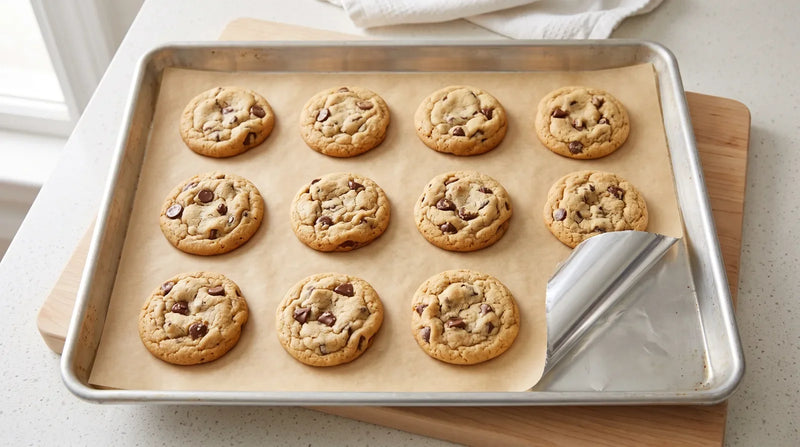
So can you swap them? Sometimes. Parchment works as a heat press cover sheet in a pinch, and a silicone-coated glassine sheet rated for food contact can line a cookie tray. But parchment curls, which is a real problem on a diamond painting canvas, and it's not designed to hold an adhesive face without bonding.
Is silicone release paper safe for food and oven heat?
Food-grade silicone release paper is safe for baking up to its rated heat, about 425°F for our glassine sheets.
The rating is the part to respect. Past it, the paper browns, turns brittle and can scorch at the edges. Keep it away from broiler elements and open flame, and don't use it on a grill grate where the paper touches the fire. Our glassine sheets are listed as food-safe and rated to 425°F, which covers cookies, sheet-pan vegetables and most roasting. The precut squares are rated for heat press work up to 400°F and aren't meant for direct flame.
One more catch: release paper isn't compostable just because it's paper. The silicone layer stays behind, so treat used sheets as regular trash unless your local program says otherwise.
If you're shopping for the baking side, our kitchen and culinary collection has mats and liners made for the oven. For roasting and grilling, the foil-backed parchment guide explains when that hybrid beats plain parchment.
Which base paper is best: glassine, SCK or CCK?
For crafts, glassine is usually best, because its dense, smooth face takes an even silicone coat.
Release liners are built on several base papers. The common ones:
- Glassine. A dense, glossy paper that resists air, water and grease. It's made by supercalendering, pressing the paper through stacked steel and fiber rolls, and the most common use of glassine is as a base for silicone release liner, according to the Wikipedia article on glassine.
- SCK (super calendered kraft). Also pressed smooth, typically used for label liners in the US. Strong, a little more opaque.
- CCK (clay coated kraft). Kraft paper with a clay coating that smooths the surface before siliconizing. Heavier and stiffer.
- MFK (machine finished kraft). Paper straight off the paper machine, rougher and cheaper.
Why does the base matter if the silicone does the releasing? Because a rough or porous base gives you a patchy coating. Thin spots stick. And a weak base tears when you peel it off something tacky, which is the complaint behind most bad reviews of cheap release paper. Our post on why release paper keeps tearing digs into the tear test.
For a closer look at glassine specifically, read what glassine release paper is and whether you need it.
What about non-silicone release paper?
Non-silicone release materials use a different low-stick surface, such as PTFE, FEP or a quilon-treated paper.
People look for these for two reasons. First, heat. PTFE handles higher temperatures than coated paper; our PTFE and FEP nonstick material is rated up to 500°F continuous for the PTFE rolls. Second, contamination. Paint and finishing shops often keep silicone out of the room, because stray silicone can cause surface defects in a fresh coating.
For everyday diamond painting, heat press and resin work, silicone paper is the easy, cheap pick. Go non-silicone only when the temperature or the shop rules call for it.
What size and format should you buy?
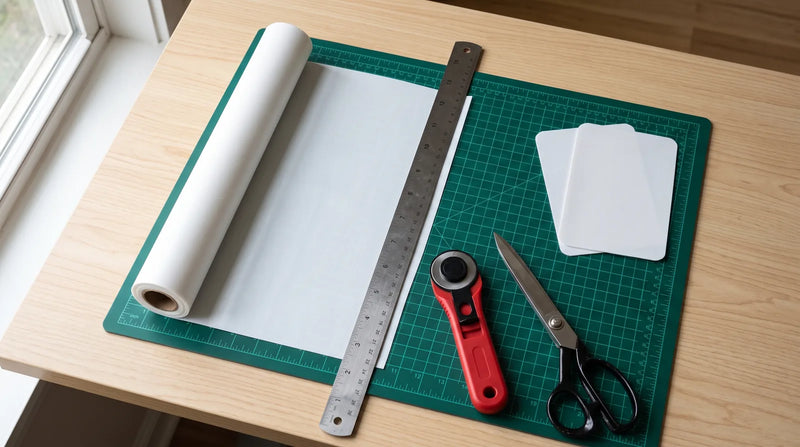
Buy flat sheets for canvases, precut squares for small repeat jobs, and rolls for long custom lengths.
Here's how the formats we carry stack up, with prices from the live product pages:
| Format | What you get | Price | Cost per sheet |
|---|---|---|---|
| Glassine sheets, 8.5 x 14 in | 1 box, 250 sheets | $25.00 | 10 cents |
| Glassine sheets, 8.5 x 14 in | 12 boxes, 3,000 sheets | $144.00 | 4.8 cents |
| Precut squares, 4.5 x 4.5 in | 1,000 sheets | $22.00 | 2.2 cents |
| Precut squares, 4.5 x 4.5 in | 5,000 sheets | $100.00 | 2 cents |
A few rules of thumb:
- Diamond painting canvas. Legal size (8.5 x 14 in) covers more canvas per sheet than letter size, so you lift fewer sheets per session.
- Heat press. A sheet only needs to cover the design plus about an inch on each side. The 4.5 inch precut squares are silicone-coated on both sides, so there's no wrong side, and they're rated for heat press work up to 400°F.
- Resin and layering. Precut squares are handy for small pieces. For a whole bench, a mat or a PTFE roll lasts longer.
Sheets or rolls: which wastes less?
Sheets waste less for repeat jobs of the same size, and rolls waste less when every job is a different size.
A roll looks cheaper per square foot, but every cut leaves an offcut, and a roll wants to curl back up when you lay it on a canvas. Flat sheets come out of the box flat and stay that way. If you're covering a 40 x 50 cm canvas every night, sheets are the better deal. If you're lining odd-shaped trays or long benches, a roll earns its keep. That's the job our PTFE roll guide covers, cut by cut.
Can you print on release paper?
Not on the coated side, because ink beads up and smears on silicone.
Print on the paper back, or on a label stock that comes with its own liner. Sticker paper is a sandwich: a printable face stock, an adhesive layer and a silicone release liner underneath. The liner is what lets the sticker peel. You print on the face stock, not the liner. Blank release paper on its own is a working surface, not a printing surface.
Every release paper and nonstick sheet we sell is grouped in one collection, linked in the shop section below. Our automatic bulk discount takes 5% off 5+ units, 10% off 10+ and 15% off 25+, with no code needed at checkout.

How do you find the coated side and make a sheet last?
The coated side of single-sided release paper is the slicker, shinier face; water beads on it and pencil won't mark it.
Three quick tests, no tools needed:
- Touch. Run a fingertip across both sides. The silicone side feels slick, almost waxy. The bare side feels like paper.
- Water bead. Put one drop of water on each side. It beads up and rolls on silicone and spreads or soaks on bare paper.
- Pencil. The silicone face resists pencil and most ink. The glassine back takes pencil and most permanent markers, which is handy for labeling.
Double-sided sheets, like our precut squares, are coated on both faces, so either side works.
How long a sheet lasts depends on the job. A sheet that only covers a diamond painting canvas can go for many sessions. A sheet that sits under a heat press at 400°F wears faster, and one that catches resin gets retired once cured bits won't brush off. Replace a sheet when it tears, wrinkles so badly it won't lie flat, or starts to grab. We've broken down the numbers by craft in how many times you can reuse silicone paper.
Pro Tip: Store sheets flat in their box, away from heat and direct sun. Curled sheets are the ones that tear first.
Shop Related Kraft & Kitchen Products
You don't need a drawer full of different papers. One box of silicone-coated glassine sheets covers diamond painting, most heat press jobs and small resin work, and a pack of precut squares handles the small repeat stuff.
- Release paper and nonstick sheets: glassine sheets, precut squares, PTFE rolls and FEP in one place
- All craft supplies: mats, tools and materials for the rest of the bench
- Bulk pricing: stock up and the discount applies on its own
Which silicone release paper should you buy first?
Start with one 250-sheet box of 8.5 x 14 in silicone-coated glassine; it covers most crafts for about 10 cents a sheet.
That's the most flexible single purchase. It's big enough for a diamond painting canvas, thin enough to stay flat, and rated to 425°F, so it doubles as a heat press cover. One customer review on the product page calls it the only paper they've found that holds up.
Add precut squares if you press a lot of small transfers or layer finished pieces for storage. Move to PTFE only when you're pressing hotter than coated paper is rated for. And if a sheet ever starts to tear or grab, it's done its job. Swap it and keep going.