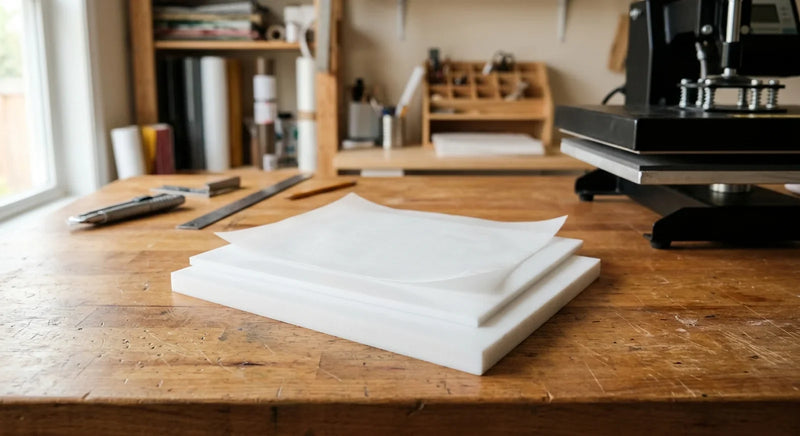
I’ve watched too many crafters blame themselves when their release paper rips mid-project. It’s not you. It’s the paper.
Most “silicone release paper” sold online isn’t silicone release paper at all. It’s rebranded parchment with a light coating that breaks down after one or two uses. And when that coating fails, you’re left peeling sticky fragments off your diamond painting canvas or scraping residue off your heat press platen. Not fun.
So let’s talk about what actually causes release paper to tear, how to tell good paper from bad, and what to look for so you stop wasting money on sheets that fall apart.

Why Does Release Paper Tear in the First Place?
Release paper tears when the base material is too thin or the coating is inconsistent. That’s the short answer. The longer version involves a bit of material science, but I’ll keep it practical.
Standard parchment paper - the kind you’d grab for baking cookies - runs about 30 to 40 GSM (grams per square meter). It’s designed for single use. One trip through the oven and into the trash. Craft-grade silicone release paper should be 60 GSM or higher, with an even silicone coating on at least one side. The difference in durability is massive.
Here’s what happens with thin paper: you press down on your diamond painting canvas, and the friction between your tool and the adhesive layer creates shear force. Thin paper can’t handle that lateral stress. It catches, bunches, and rips. Same thing with a heat press - 300°F and 40 PSI of pressure will destroy flimsy paper in seconds.
And the coating matters just as much as the thickness. A true silicone coating creates a smooth, nonstick barrier that lets your tools glide across the surface. A cheap wax or partial coating creates uneven friction - smooth in some spots, grabby in others. That inconsistency is exactly where tears start.
How Can You Tell If Your Release Paper Is Actually Silicone-Coated?
A genuine silicone-coated release paper will feel distinctly slick on the coated side and slightly textured on the uncoated side. If both sides feel the same, it’s probably just parchment. Here’s a quick test I use.
Take a piece of clear tape and press it firmly onto the coated side. Peel it off. On real silicone paper, the tape comes away cleanly with almost no resistance. On parchment or wax-coated paper, the tape grabs and pulls fibers with it. You’ll actually see tiny paper fragments stuck to the adhesive strip.
Another tell: hold the sheet up to a light source. Quality silicone release paper has a consistent, slightly translucent appearance. Cheap alternatives show uneven patches where the coating is thicker or thinner - those thin spots are your future tear points.
The thickness test is even simpler. Fold the sheet gently. Real silicone release paper bounces back without creasing. Parchment cracks along the fold line. That cracking means the fibers have broken, and a cracked fold becomes a tear the moment any pressure hits it.
Pro Tip: If your paper leaves a waxy residue on your fingertips when you rub the surface, that’s a wax coating, not silicone. Silicone feels slick but doesn’t transfer anything to your skin.

Does Paper Size Affect How Often It Tears?
Larger sheets tear less because you aren’t repositioning them constantly. A standard 8.5 x 11 inch sheet barely covers most diamond painting canvases or heat press platens, so you end up sliding it around to protect different sections. Every time you move it, you’re creating friction and folding opportunities. More movement means more chances for damage.
A legal-size sheet (8.5 x 14 inches) gives you three extra inches of coverage in the long dimension. That sounds small, but it means fewer repositions per session. For diamond painters working section by section, those extra inches often mean the paper stays put for an entire work session without adjustment. According to the Consumer Product Safety Commission’s materials testing guidelines, repeated mechanical stress on thin materials accelerates failure at fold points - which is exactly what happens when you keep adjusting undersized sheets.
I’ve seen crafters cut large sheets in half to “save money.” Don’t do that. You’re creating two undersized sheets with raw cut edges that fray immediately. Buy the right size for your project and use the full sheet. Your craft supplies budget will actually go further because each sheet lasts its full 2-3 use cycle instead of tearing on the first session.
What Should You Look for When Buying Release Paper?
The three factors that determine whether your release paper survives a project are weight, coating type, and fiber direction. Here are the specs that matter.
Weight (GSM): 60 GSM minimum for craft use. Anything below 50 GSM is bakery-grade parchment repackaged for crafters. It’ll work once, maybe. For heat press work where temperatures hit 350°F or higher, look for sheets rated at 80 GSM or above. The National Institute of Standards and Technology notes that paper weight directly correlates with tensile strength - heavier sheets resist tearing under the same load.
Coating: True silicone coating on at least one side. The silicone layer serves two purposes: it prevents sticking and it reinforces the paper fibers against lateral shear. Some manufacturers apply what they call “siliconized” parchment, which is a thinner coating that wears off faster. It’s not the same thing!
Fiber direction: Paper has a grain, just like wood. Tearing along the grain takes less force than tearing across it. Quality release paper manufacturers align the grain in the long dimension so the sheet resists tearing in the direction you’re most likely to apply pressure. This is why cutting sheets into random shapes often backfires - you might end up with the weak grain running the wrong way.
For diamond painting specifically, your release paper needs to handle the pressure of placing drills, survive being peeled on and off the adhesive canvas, and resist curling when left in place between sessions. A good diamond painting accessories setup includes properly weighted release paper as a non-negotiable tool.
If you’re doing heat press projects, you need paper rated for the temperatures you’re working at. Standard silicone release paper handles up to about 400°F, but PTFE sheets - which are a different product entirely - go up to 500°F and last hundreds of cycles. For a breakdown on which material fits which job, check out our guide on FEP vs silicone release paper vs parchment. And if you’re a diamond painter struggling with more than just paper, our article on why diamond painting drills fall off covers another common frustration and how proper supplies fix it.

Can You Make Cheap Release Paper Last Longer?
Sort of, but it’s a losing game. You can extend the life of mediocre release paper by storing it flat (never rolled), keeping it away from moisture, and handling it by the edges. But you’re still working with inferior material.
Here’s the math. A 50-sheet pack of budget parchment paper runs about $6. Each sheet tears after one use, sometimes during the first use. That’s $6 for 50 sessions at best. A 50-sheet pack of proper silicone release paper costs about $12, and each sheet handles 2-3 sessions easily. That’s $12 for 100-150 sessions. You spend twice as much upfront and get three times the value. For a deeper look at reuse cycles, we covered this in detail in our piece on how many times you can reuse silicone paper.
The only trick that actually works for extending paper life is to rotate your sheets between uses. Don’t use the same sheet three times in a row. Use it once, set it aside, use another sheet, and come back to the first one later. This gives the silicone coating time to “rest” and reduces cumulative stress on the same fold points.
But if your paper is tearing on the first use? No amount of careful handling will fix that. The material itself isn’t up to the job. Switch to something better and stop fighting it.
For resin crafting, the stakes are even higher. A tear in your release paper during an epoxy pour means resin seeps through and bonds to your work surface. That’s not a ruined sheet - that’s a ruined table. Reviews consistently mention that thicker silicone paper is worth the premium for resin work because the cost of one cleanup is more than a year’s worth of quality paper.
If you do a lot of heat pressing or resin work, consider PTFE or FEP nonstick sheets instead of paper. They cost more per sheet but last for hundreds of uses, which makes them the better long-term investment for heavy crafters.
Shop Release Paper That Won’t Let You Down
Ready to stop dealing with paper that rips? Kraft & Kitchen carries quality silicone release paper in legal size (8.5 x 14”) - thicker than standard craft paper and coated with true silicone for reliable nonstick performance. Whether you’re covering a diamond painting canvas, protecting your heat press platen, or lining a resin workspace, these sheets hold up session after session. Browse our silicone pads and mats for even more surface protection options, or check out the full bulk pricing collection if you go through sheets quickly.
The bottom line: if your release paper tears, the paper is the problem. Get sheets that are thick enough, coated properly, and sized for your project. Your crafting sessions will go smoother, your projects will come out cleaner, and you’ll spend less in the long run. That’s worth the upgrade!
For more on different release paper types, check out our guide on what glassine release paper is and whether you need it.