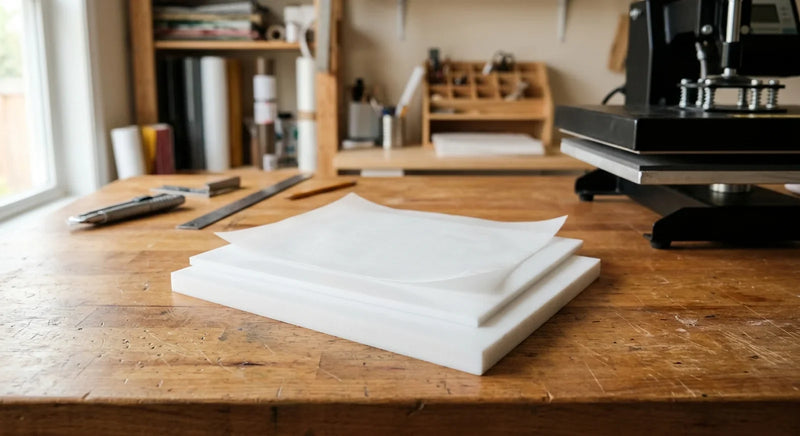
The short answer: 2 to 3 times per sheet for most craft projects. But the real answer depends on what you’re doing with it, how you’re storing it, and whether you bought actual silicone-coated paper or just rebranded parchment.
I’ve tracked my own usage across diamond painting, heat pressing, and resin work over the past year. Here’s what the numbers look like - and how to squeeze every last session out of each sheet.
What Determines How Long a Sheet Lasts?
Three things control your sheet’s lifespan: coating quality, heat exposure, and how you handle it between uses.
Silicone release paper is a silicone-coated protective sheet used in crafts, baking, and industrial applications that provides a non-stick surface for diamond painting, heat press projects, resin work, sticker making, and food preparation.
True silicone release paper has a molecular-level silicone coating bonded to the paper fibers. It doesn’t wear off from normal handling. Cheap parchment paper with a surface-level coating? That wears through in one use. You can tell the difference by rubbing the surface between your fingers - real silicone coating feels consistently slick on both sides, while parchment feels papery on one side.
Heat is the biggest factor for degradation. A heat press running at 350 degrees puts way more stress on the coating than diamond painting at room temperature. And adhesive residue from HTV projects builds up faster than the light contact from smoothing drills.
How Many Uses Do You Get Per Craft?
Here’s the breakdown based on testing with quality silicone-coated paper:
Diamond painting gets you 3 to 5 sessions per sheet. The paper only contacts the adhesive canvas lightly, and you’re working at room temperature. I’ve pushed some sheets to 6 uses before the release started getting patchy. If you’re working on larger canvases with diamond painting accessories, you might go through paper a bit faster since there’s more surface contact per session.
Heat press and HTV projects get 2 to 3 presses per sheet at standard temperatures (300 to 350 degrees Fahrenheit). Above 375 degrees, expect 1 to 2 uses. The coating handles heat well, but repeated thermal cycling weakens it over time. PTFE sheets are the better choice if you’re pressing daily - they handle hundreds of cycles without losing their release properties.
Resin crafts get 1 to 2 uses. Epoxy is aggressive stuff. Even with proper curing, some residue bonds to the paper. For resin workspace protection, plan on one use per pour and treat anything beyond that as a bonus.
Baking gets 2 to 3 uses for cookies and sheet pan meals. Higher heat baking (above 400 degrees) drops that to 1 to 2 uses. The paper still works fine, but the coating breaks down faster at sustained high temperatures.

When Should You Replace a Sheet?
Don’t wait until your project sticks. Three warning signs tell you it’s time for a fresh sheet.
The paper feels rough or papery in spots where it used to feel slick. That means the silicone coating has worn through. Run your fingers across the surface and you’ll feel the difference immediately.
Adhesive or resin residue won’t peel off cleanly. Fresh silicone paper releases everything with zero effort. Once residue starts bonding to the surface, the coating is compromised.
The paper tears during normal handling. Quality silicone paper has decent tear resistance. If it’s ripping when you fold or smooth it, the fibers are breaking down from repeated heat exposure or moisture contact.
And here’s a mistake I see constantly: people reuse sheets across craft types without checking condition first. A sheet that survived three heat press sessions at 325 degrees might still feel okay, but the coating could be partially degraded. Using it for diamond painting afterward means your canvas adhesive might grab onto weakened coating fibers. Not great for your project!
Does the Cost Math Actually Work Out?
Let’s run the numbers. A 50-sheet pack of quality silicone release paper runs about $12 to $15. At 2 to 3 uses per sheet, that’s 100 to 150 total sessions.
Standard parchment paper from the grocery store costs roughly $5 for 75 square feet. Sounds cheaper at first glance, right? But it’s single-use. You cut it to size, use it once, and toss it. So your $5 roll gives you maybe 20 to 25 usable pieces. According to the EPA’s waste reduction data, Americans generate over 80 million tons of paper waste annually - and single-use craft supplies contribute to that total.
Here’s the per-session breakdown: silicone paper costs roughly $0.08 to $0.12 per use. Parchment paper runs $0.20 to $0.25 per use. The reusable option costs less than half per session.
But the real savings come from the projects you don’t ruin. I’ve personally wrecked two diamond painting canvases when cheap paper tore and pulled adhesive off the canvas. One HTV shirt where parchment stuck to the vinyl mid-press. Those wasted materials cost more than a full year’s supply of proper release paper. So yeah - the math works out fast.

How Do You Maximize Each Sheet’s Lifespan?
Five habits that stretch your paper further:
Step 1: Let the paper cool completely before storing after heat press use. Folding warm paper cracks the coating at the fold lines. I give mine 10 minutes minimum before putting it away.
Step 2: Store sheets flat. A simple manila folder or large envelope works perfectly. Crumpling, rolling, or stuffing sheets into a drawer creates permanent weak spots where the coating fails.
Step 3: Clean between uses with a dry microfiber cloth. This removes surface dust and light adhesive residue without damaging the coating. Don’t use water or cleaning sprays - moisture weakens the paper fibers underneath.
Step 4: Match the material to the workload. Silicone release paper for diamond painting and light-duty crafts. PTFE sheets for heavy heat press work. Using the right paper for each job means every sheet lasts its full potential.
Step 5: Buy legal-size sheets (8.5 x 14 inches) instead of letter size. The extra two inches means you can trim off worn edges and keep using the center portion. I’ve added an extra use or two per sheet just from having that buffer room.

What If You’re Going Through Paper Too Fast?
If you’re burning through sheets weekly - pressing 10 or more shirts, running a sticker business, or doing resin pours every day - silicone paper stops being the most cost-effective option.
That’s where PTFE and FEP materials earn their keep. PTFE sheets handle hundreds of heat press cycles before showing wear. The upfront cost is higher, but the per-use cost drops to almost nothing over time. Research from the American Chemical Society on fluoropolymer coatings confirms that PTFE maintains its non-stick properties at temperatures up to 500 degrees Fahrenheit - well above standard heat press ranges. FEP film is thinner and more flexible, which makes it better for wrapping curved surfaces or lining resin molds.
So my recommendation: start with silicone release paper for general crafting. If you find yourself replacing sheets more than once a week, upgrade to PTFE for your highest-use application and keep the silicone paper for everything else.
Shop Related Products
Shop Release Paper and Nonstick Supplies
Ready to stock up on materials that actually last? Kraft & Kitchen carries silicone release paper in bulk packs and PTFE sheets in multiple sizes for heat press, resin, and daily crafting use. Not sure which material fits your projects? Our comparison guide breaks down the real differences.
The per-session cost of quality release paper is less than a quarter. The cost of one ruined project? Way more than that.