Quick answer: Swap the kit's plastic film for silicone release paper and peel back one small section at a time. Release paper is paper with a cured silicone coating, so canvas adhesive can't bond to it, and a good sheet lifts off clean for dozens of sessions.
The clear film that ships on a diamond painting canvas is built to come off once. Diamond painters peel it back hundreds of times. That mismatch is why so many people end up with creased film, static-charged drills and canvas edges that stop holding. A sheet of silicone release paper for diamond painting fixes all three, and it costs very little per session.

What Is Release Paper for Diamond Painting?
Release paper is a paper sheet with a cured silicone coating that adhesive can't grip, used as a reusable canvas cover.
The industry name is a release liner: a paper or film sheet that keeps a sticky surface from bonding before you want it to. It's the same idea as the backing on a sticker sheet. That coating creates a surface with extremely low surface energy, which is a technical way of saying almost nothing sticks to it. The adhesive on your diamond painting canvas can't bond to silicone the way it bonds to plastic or bare fingers.
What is diamond art release paper made of?
Most diamond painting release paper is glassine with a silicone layer on one or both sides.
Glassine is a smooth, glossy paper made by pressing the fibers very dense, which leaves it air, water and grease resistant. That dense base matters. A loose, fibrous paper lets the coating crack and lets adhesive creep into the gaps. A dense base keeps the silicone layer even, so the sheet peels the same way on the hundredth lift as on the first.
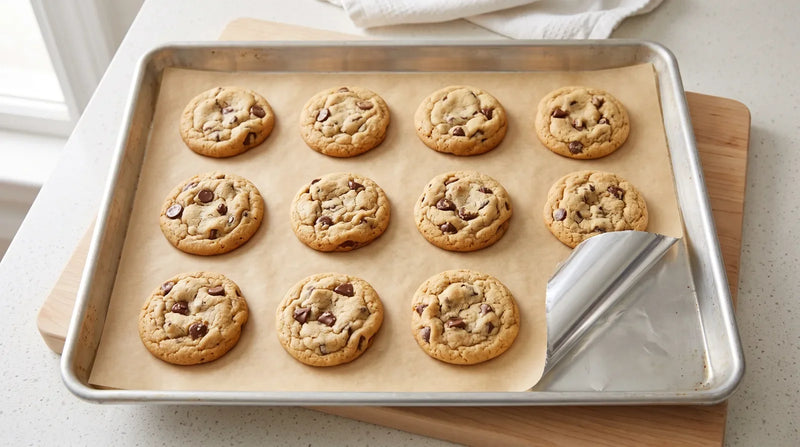
Our diamond painting supplies use silicone-coated glassine with the coating bonded to the paper, not sprayed on, so it doesn't flake onto your canvas. It's rated to 425F, which is why the same sheets also work in the kitchen.
What is release paper used for in diamond painting?
It covers the sticky canvas between sessions and around your working area so the adhesive stays clean.
Exposed adhesive collects dust, pet hair and skin oils. The longer it stays open, the weaker it gets. A cover that lifts and lays back down without a fight is what makes small-section work practical. Painters also use spare sheets to stack finished sections, protect a canvas during shipping, and as a clean surface for rolling out a canvas that arrived curled.
Is Release Paper the Same as Parchment Paper?
No. Both use silicone, but release paper carries a heavier coating meant for strong adhesives, not cookie dough.
Kitchen parchment (baking) paper gets its nonstick surface from a silicone coat or a chemical treatment, sized for butter and dough. Diamond painting adhesive is much stickier than cookie dough. The heavier silicone coating on true release paper handles that stronger adhesive without problems.
The practical difference shows up fast. Parchment often works for a session or two before the coating wears and the canvas starts grabbing it. Real silicone release paper lasts through dozens of sessions and keeps peeling cleanly. We go deeper on the coatings in silicone release paper vs parchment paper.
Can you use parchment paper as release paper for diamond painting?
Yes, for a short project or in a pinch, but expect to replace it far more often than real release paper.
If you go this route, use plain unbleached parchment, keep the pieces large so the edges don't lift, and swap it as soon as you feel the peel start to drag. Skip foil-backed parchment. The foil layer is stiff and creases, which is the same problem you were trying to get away from.
Why Does the Plastic Cover Film Fall Short?
Kit film creases permanently, builds static and loses its clean peel after a few lifts.
Every diamond painting kit ships with a clear plastic film over the adhesive canvas. It works. Technically. But the film is designed to be removed all at once, not peeled back and repositioned repeatedly. Every time you fold it back to expose a section, the fold creates a permanent crease. After three or four repositions, that crease becomes a ridge that sits above your working surface, and drills near the crease don't sit flat.
Static electricity is the other problem. Plastic film builds up static as you peel it, which attracts loose drills and dust. Drills can jump off the canvas and cling to the underside of the film, so you spend time picking strays off the cover instead of placing them where they belong.
Release paper doesn't build static the same way. It doesn't crease permanently. And it peels away from adhesive cleanly because the silicone coating prevents bonding.
How Do You Use Release Paper for Diamond Painting, Step by Step?
Replace the kit film with cut release paper, then expose one small section at a time and lay the paper back after.
The technique is simple, but a few details make a real difference.
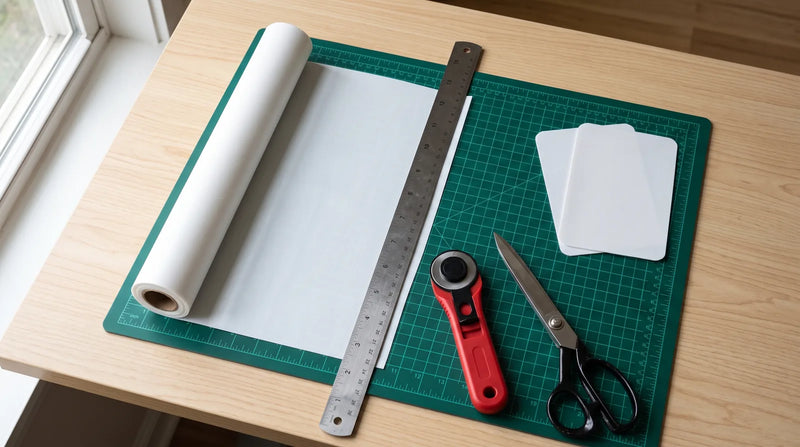
Step 1: Measure the adhesive area. Your release paper should extend at least 2 cm beyond the adhesive on every side. A piece that barely covers the adhesive will shift during work and expose the edges, which are the first part of a canvas to dry out.
Step 2: Cut the paper to size. You want full coverage so no adhesive is exposed when you're not working. If your canvas is larger than your paper (a common issue with letter-size sheets), use two pieces that overlap by about 2 cm.
Step 3: Find the coated side. On one-side-coated paper, the coated side goes against the adhesive. It feels slippery, almost waxy. The uncoated side feels like regular paper. Double-coated sheets work either way up.
Step 4: Swap the film in one move. Peel the kit film off in one direction and lay the release paper down right behind it, so the canvas is never fully open. Removing the film completely feels wrong the first time, but it's the right move. The film has already started losing its clean release.
Step 5: Expose one section. Lift one edge and fold the paper back to your working line, roughly a 5 x 5 cm area. Complete that section, then smooth the paper back down. The silicone coating means it won't bond to the adhesive or disturb any placed drills.
Step 6: Cover it every time you stop. Even a ten-minute break is enough for dust and hair to land. Lay the paper flat over the open section before you get up.

Why does the section-by-section method work?
Small sections keep most of the adhesive covered, so it stays tacky for the life of the project.
A canvas that's been fully exposed for an hour holds drills noticeably worse than one that's been covered and only opened in small working areas. With the kit film, section work is awkward. You have to fold the film precisely, and it fights you every step. With release paper, you lift one edge, fold it back to your working line, and lay it down when you're done. No fighting, no static, no permanent creases. If a section has already gone dry, our guide on keeping a diamond painting canvas sticky covers the fixes.
What Size and Weight of Release Paper Should You Buy?
Letter (8.5 x 11 in) fits small canvases; legal (8.5 x 14 in) or a roll is better past about 30 x 25 cm.
Standard letter-size release paper covers most small to medium canvases. Legal-size gives you three extra inches of coverage. That doesn't sound like much, but it means full coverage on medium canvases without overlapping, and fewer pieces on large ones.
For large canvases (50 x 70 cm and up), cut from a roll rather than piecing together sheets. One continuous piece over the entire canvas is much easier to manage than several overlapping sheets that can shift during a session.
Does paper thickness matter?
Yes. Thin paper tears on the peel, and very heavy paper won't fold neatly along a section line.
Thin release paper tears when you peel it from sticky adhesive, leaving fragments stuck to your canvas that are annoying to remove. Thin paper also lets the adhesive grab through if you press on it. Very heavy paper protects well but resists folding, so it's better suited to flat jobs like release paper on a heat press, where rigidity helps. A dense, mid-weight glassine sits in the useful middle: stiff enough to lie flat over placed drills, flexible enough to fold and reposition. If your current paper keeps ripping, why release paper tears walks through the usual causes.

How Long Does a Sheet of Release Paper Last?
A good silicone-coated sheet handles dozens of peel-and-replace cycles before the coating wears thin.
How long yours lasts depends on how aggressively you peel it (gentle is better), how sticky the canvas is, and how you store it. You'll know a sheet is wearing out when you feel slight resistance during peeling. Fresh release paper lifts off adhesive with almost no effort. Once you feel even a little tug, the coating is thinning and it's time for a new sheet. On a project that runs 50+ hours, plan on two or three sheets over its life.
Store used release paper flat between sessions. Rolling or crumpling it cracks the silicone along the stress lines, which creates weak spots where adhesive can grab. A large folder, a flat drawer, or a silicone mat under the stack keeps sheets flat and clean. There's more on wear and reuse in how many times you can reuse silicone paper.
What Can You Use Instead of Release Paper?
Parchment works short term; plastic wrap, wax paper and freezer paper all cause more trouble than they fix.
Some diamond painters reach for whatever is in the kitchen drawer. Here's how the common swaps hold up:
- Parchment paper: the closest substitute. Lighter coating, so it wears out after a few sessions.
- Plastic wrap: the same static problem as kit film, plus it clings to everything and wrinkles constantly.
- Wax paper: the paraffin coating is soft and can transfer onto the adhesive, cutting its grip.
- Freezer paper: the plastic-coated side is too stiff for precise section folds.
- The original kit film: fine for storage once a project is finished, poor for daily section work.
Silicone release paper was designed for exactly this type of repeated adhesive contact. It isn't a workaround. It's the right tool for the job.
What Release Paper Mistakes Should You Avoid?
The big three: wrong side down, pieces cut too small, and worn sheets kept in service too long.
Problem: drills stick to the cover. Fix: flip it. On one-side-coated paper, the slick side faces the canvas.
Problem: the canvas edges go dry first. Fix: cut the paper at least 2 cm past the adhesive on every side so the edges stay covered.
Problem: the paper starts tugging at the canvas. Fix: retire the sheet. The cost of a new one is small next to losing adhesive on a canvas you've spent weeks on.
Problem: creases appear in the cover. Fix: fold along the same line each time, and never crumple or roll a sheet for storage.
Shop Related Kraft & Kitchen Products
If the kit film is fighting you, a box of silicone-coated glassine is the cheapest upgrade you can make to a diamond painting setup. It also doubles as a cover for resin work and a liner in the kitchen. Bulk discounts apply automatically: 5% off 5+ units, 10% off 10+, and 15% off 25+.
- Nonstick release papers: silicone-coated glassine sheets that peel off a canvas in one piece.
- Craft supplies: the rest of the workbench, from mats to storage.
- Bulk pricing: multi-box packs for big canvases, clubs and craft studios.
Release Paper FAQ
Is release paper the same as glassine paper?
Not quite. Glassine is the base paper; release paper is glassine (or another paper) with a silicone coat added. Plain glassine has no nonstick layer, so canvas adhesive will grab it. See what glassine release paper is for the full breakdown.
Can you reuse release paper on a different canvas?
Yes. As long as the sheet still peels without drag and has no creases, move it to the next canvas. Wipe off any stray drills first.
Should release paper go shiny side down?
Yes. The shiny, slippery side is the silicone coat, and it goes against the adhesive.
Can release paper go in the oven?
Ours can. The silicone-coated glassine we sell is rated to 425F, so spare sheets work as a baking liner too.
Release paper won't place a single drill for you. But it keeps the canvas you paid for sticky from the first section to the last, and that's the part of diamond painting that's hardest to fix after the fact.